Showing posts with label iphone 6. Show all posts

Wednesday, March 30, 2016

Review: Apple’s iPhone SE Is the Perfect Smaller Smartphone


It looks like an iPhone 5s but performs like an iPhone 6s

The good: Great battery life; fast performance; good camera; new features like Live Photos and Apple Pay at a cheaper price
The bad: Still expensive compared to some Android phones; 16GB of storage for the entry level model
Who should buy: People who prefer smaller phones (yes, those exist)
As mobile devices have become a more important part of our daily lives, they’ve grown in physical size too. Most popular smartphones come with screens that measure around five inches diagonally, now. Some companies, like Google and Samsung, have gone even bigger.
Apple is betting that not everyone wants (or needs) a big phone.With itsiPhone SE, Apple is reviving a more compact four-inch form factor that hasn’t been widely available since 2013.
Although the SE might look like an iPhone 5s, it’s certainly not built like one. The SE runs on the same A9 processor that powers the iPhone 6s and includes a 12-megapixel camera with support for Live Photos along with some other enhancements. It’s also priced much lower than Apple’s larger phones at $399 without a carrier subsidy or payment plan. (The iPhone 6 starts at $549, while the 6s has a base price of $649.)
Using the iPhone SE has made me remember how well-built Apple’s four-inch models are. The iPhone SE’s smaller design and boxy shape makes it easier to grasp without using a case, while the iPhone 6 and 6s sometimes feel slippery because of their rounded edges.
The biggest visual difference between the iPhone SE and iPhone 5s is its rose gold color option, but Apple has made some other more subtle tweaks too. The SE’s chamfered edges now have a matte look compared to the shiner aesthetic on the 5s, and the back of the phone has a stainless steel Apple logo. The SE doesn’t feel like a cheaper iPhone. It feels like a premium device, that just happens to be smaller in size.
Apple calls the iPhone SE “the most powerful 4-inch phone,” a seemingly accurate claim since four-inch phones are increasingly hard to find. But since the SE runs on the same processor as Apple’s latest flagship, it can also keep up with larger more expensive smartphones. For example, the iPhone SE was able to load games like Dead Trigger 2 and launch its camera just as quickly as Samsung’s Galaxy S7, even faster in some cases.
It’s really the SE’s battery life that impressed me the most. After a full day’s worth of use, which included a mix of browsing the Web, checking Facebook, streaming Netflix, playing graphics-intensive mobile games, and occasionally turning on Bluetooth to pair accessories, the phone still had about 50% battery left.
Apple has also packed the SE with some other goodies from the iPhone 6s, including its 12-megapixel camera, the ability to shoot Live Photos, and a Retina flash for the front-facing camera. Photos taken on the iPhone SE looked vibrant and were slightly more colorful than those taken on the iPhone 6’s 8-megapixel camera and Galaxy S7’s 12-megapixel camera in some cases.
All three phones captured what essentially looks like the same image, but if you look closely at the photos below you’ll notice the one taken on the SE shows bolder colors in certain spots. For example, the green rooftop in the distance is more pronounced in the SE’s photo than those taken on the two other phones.
iPhone SE

Lisa Eadicicco

iPhone 6

Lisa Eadicicco

Galaxy S7

Lisa Eadicicco

The iPhone SE isn’t great at capturing images in low-light conditions without the flash turned on. However, it does seem like the color accuracy has improved compared to the iPhone 6, since you’ll notice the cat’s fur looks more white.
iPhone SE

Lisa Eadicicco

iPhone 6

Lisa Eadicicco

Galaxy S7

Lisa Eadicicco

The SE’s front camera is much better at taking photos in dim areas. The SE has a 1.2-megapixel camera like the iPhone 6, but comes with Apple’s Retina Flash technology, which prompts the screen to function as a camera flash in dark situations. The front camera has a lower-resolution than more expensive flagships like iPhone 6s and Galaxy S7 (both have 5-megapixel front cameras), so expect to see a little more noise than you might with Apple’s pricier phone.
That said, the SE is leaps ahead of the iPhone 6 when it comes to taking low-light photos with the front camera. Take a look at the difference below:
iPhone SE

Lisa Eadicicco

iPhone 6

Lisa Eadicicco

Plus, the SE supports Live Photos, which captures the moments just before and after the photo was taken to create cute clips like this:

Lisa Eadicicco

To be clear, the iPhone SE isn’t really meant to compete with high-end smartphones like the Galaxy S7 and iPhone 6s. Apple is positioning the SE as a way to make the iPhone experience more accessible to those who prefer smaller phones and may be shopping on a tighter budget, and it succeeds at that. I only decided to test the SE against the Galaxy S7 in a few cases because certain hardware aspects are similar to what you might get in a more expensive phone, like its processor and camera. At the same time, I wanted to demonstrate some of the differences between the SE and iPhone 6’s older hardware.
The iPhone SE is a Apple’s most affordable iPhone, with the 16GB model selling for $399 unlocked. The downside, however, is that you can’t upgrade the amount of storage in the iPhone like you can with some inexpensive Android phones. That means if you want more than 16GB, you have to pay $499 instead of $399. The cheaper OnePlus X, for example, also comes with 16GB of space but supports expandable storage up to 128GB. Other low-cost phones, like Motorola’s Moto G, allow you to upgrade storage as well.
There are tradeoffs to be considered whether you choose the iPhone SE or a low-cost Android phone. At $249, the OnePlus X is a little more than half of the price of the 16GB iPhone SE, and offers some impressive features (a clean Android experience, expandable storage, high-resolution front and main cameras, and a sharp 1080p screen). But it lacks certain other special features found on the SE, like a fingerprint sensor, NFC support for mobile payments, and 4K video recording. Plus, its 5-inch screen is likely too large for those who are truly looking for a phone that’s physically similar to the iPhone 5s.

Thursday, March 3, 2016

iPhone 6 vs. iPhone 6s Buyer's Guide


Apple's smartphones have been released on a "tick-tock" cycle since 2008. The iPhone 6 lineup represented a "tick" year, which involved a complete design overhaul, while the iPhone 6s lineup was part of a "tock" year, which generally focused on camera and processor improvements, new features such as 3D Touch and Live Photos, and incremental refinements like faster Touch ID, LTE, and Wi-Fi. 

iPhone-6-side-view
From a distance, the iPhone 6 and iPhone 6s lineups look and feel like virtually identical smartphones. It is true that both models share several attributes, but the iPhone 6s and iPhone 6s Plus have many features that are not included on the year-older iPhone 6 and iPhone 6 Plus. So, which one should you choose to purchase or upgrade to? What about the rumored iPhone SE and iPhone 7? Let's take a closer look. 

Shared Features Between iPhone 6s and iPhone 6

Design


iphone_screen_sizes_6_6plus
Apple fulfilled consumer demand for larger-screen smartphones with the 4.7-inch iPhone 6 and 5.5-inch iPhone 6 Plus, and it retained those sizes for the iPhone 6s and iPhone 6s Plus. If you prefer another screen size, the so-called 4-inch "iPhone SE" is expected to be announced at Apple's rumored March media event. All older iPhones released in 2013 or earlier also measure between 3.5" and 4" diagonally. 

Virtually all other design aspects of the larger iPhones are the same, including a unibody aluminum shell, 2.5D curved glass, round edges, pill-shaped volume buttons, circular speaker grilles, and more. Apple has always stuck with nearly identical designs for iPhone "S" models, including the iPhone 3G and iPhone 3GS in 2008-09, iPhone 4 and iPhone 4s in 2010-11, and iPhone 5 and iPhone 5s in 2012-13. 

iOS 9


ios_9_iconiOS 9 is focused on intelligence and proactivity, enabling iOS devices to learn user habits and act on that information through app suggestions, notifications, and a customized "Siri Suggestions" interface populated with the user's favorite contacts and apps, nearby places, and relevant news stories. 

iOS 9 includes several new features and improvements beyond Proactive Siri and Search, including Apple News, Apple Maps transit routing, Notes checklists and sketches, app thinning, a simpler HomeKit setup process, under-the-hood battery life enhancements, built-in two-factor authentication, and more. 

Battery Life


The iPhone 6s has a 1715 mAh battery, which is smaller in capacity than the 1810 mAh battery that was in the iPhone 6. The iPhone 6s Plus has a 2750 mAh battery, also smaller in capacity than the 2915 mAh battery that was used in the iPhone 6 Plus. 

Apple may have used a smaller battery to make room for vital 3D Touch components in the new iPhones, both of which include a new part called a "Taptic Engine." The Taptic Engine provides haptic feedback for 3D Touch gestures and also powers the vibrations for alarms and notifications. 

iphonebatterycomparison
Nevertheless, efficiency improvements introduced with the A9 chip and other performance enhancements have resulted in the two devices offering the same battery life as the iPhone 6 and 6 Plus. 

On paper, the iPhone 6s offers up to 14 hours of talk time, 10 days of standby time, 11 hours of video playback, 10 hours of Internet use on LTE. The iPhone 6s Plus offers 24 hours of talk time, 16 days of standby time, 14 hours of video playback, and 12 hours of Internet use on LTE. 

New Features Found Only in the iPhone 6s and 6s Plus

Faster A9 Chip with 2GB of RAM


iPhone 6s and iPhone 6s Plus have a 64-bit Apple A9 chip with 2GB of RAM for up to 70% faster CPU performance and up to 90% faster graphics compared to the 64-bit A8 chip with 1GB of RAM in iPhone 6 and iPhone 6 Plus. The upgrades result in apps opening slightly quicker and overall improved speed across iOS, apps, and games. 

iPhone-6s-A9-vs-A8-charts
Apple has also directly embedded the M9 motion coprocessor into the A9 chip for increased performance and efficiency. Both the iPhone 6's M8 and iPhone 6s's M9 connect to the accelerometer, compass, gyroscope, and barometer for fitness tracking, but only the M9 is efficient enough to detect audio input in the background for always-on "Hey Siri"functionality on iOS 9 or later. 

Improved Cameras with 4K Video


iPhone 6s and iPhone 6s Plus have an upgraded 12-megapixel rear-facing iSight camera and 5-megapixel front-facing FaceTime camera, compared to an 8-megapixel iSight camera and 1.2-megapixel FaceTime camera on iPhone 6 and iPhone 6 Plus. Coupled with the A9 chip, this translates to faster auto focus, and improved color accuracy, details, and sharpness, particularly in low light. 

iPhone-6s-camera
The FaceTime camera's jump to a 5-megapixel sensor is especially noticeable, resulting in significantly reduced noise for "selfies" and other photos. The front-facing shooter still lacks LED flash, but Apple introduced a new feature called "Retina Flash" that flashes the display when you take a photo. The feature is based on a custom chip that makes the display flash up to three times brighter than usual. 

macrocomparison
Camera+'s comprehensive gallery of side-by-side iPhone camera comparison photos

iPhone 6s and iPhone 6s Plus can also capture 4K video at 30FPS, allowing iPhone users to take videos with incredible levels of detail. 4K video joins 240FPS Slo-mo video and Time-Lapse video, both features introduced in past-generation devices. Time-Lapse video gains new stabilization features with the new iPhones. 

Apple also says the iPhone 6s and iPhone 6s Plus cameras have improved local tone mapping, improved noise reduction, panoramas up to 63 megapixels, playback zoom, and the ability to shoot 8-megapixel still photos while recording 4K video. iPhone 6s Plus also exclusively has image stabilization for video. 

Live Photos


Live Photos is a new feature exclusive to the iPhone 6s and iPhone 6s Plus. When enabled, the feature captures an extra 1.5 seconds before and after a shot, with the footage being used to animate the photo with movement and sound. The result looks something like a short GIF. 


When a 3D Touch press is used on a photo, it comes to life with animation to add a bit of context. Live Photos are not true videos, but rather a combination of a 12-megapixel JPG with a MOV file that contains 45 frames playing back at around 15 frames per second. Live Photos take up about twice the space of normal photos. 

Live Photos can still be viewed on iPhone 6 and iPhone 6 Plus. 

3D Touch


iPhone 6s and iPhone 6s Plus models have new pressure-sensitive screens that can detect the level of force applied to the screen, allowing for a new technology called 3D Touch. The new feature builds upon traditional multi-touch gestures like tapping, pinching, and swiping by introducing two more interactions called Peek and Pop, Quick Actions home screen shortcuts, and pressure-sensitive drawing in supported apps. 


Peek and Pop enable you to preview content within iOS apps without opening it. If someone sends you an address in Messages, for example, you can press down the screen lightly to Peek at the location on Apple Maps, without leaving the conversation. If you want to view more details about the address in Apple Maps, you can press a little bit harder and the Pop gesture will switch you to the app. 

Quick Actions are one-tap shortcuts that work right from the Home screen by firmly pressing on the icon of any supported stock or third-party app. By pressing on the Facebook app icon, for example, a Quick Actions menu pops up with shortcuts for writing a post, uploading a photo or video, taking a photo or video, or viewing your personal profile. Many popular apps have been updated with the feature. 


But is 3D Touch something that you will use? For some iPhone users, the feature is not as natural of an experience as tapping, pinching, or swiping, so it may take some time before Peek and Pop gestures become registered in your muscle memory. Even then, Peek, Pop, and Quick Actions trim only a few seconds off most tasks. Ultimately, the convenience of 3D Touch comes down to personal preference. 

Faster Touch ID


iPhone 6s and iPhone 6s Plus have a next-generation Touch ID sensor that detects your fingerprint faster, but the difference only amounts to a fraction of a second over the iPhone 6. Some users have complained that the new Touch ID is actually too fast, preventing access to the Lock screen when pressing the home button. 

Faster LTE and Wi-Fi


Apple says data speeds on the iPhone 6s and iPhone 6s Plus are theoretically up to twice as fast -- up to 300 Mbps -- with LTE-Advanced, and the 23 supported LTE bands are the most of any smartphone. 802.11a/b/g/n/ac Wi‑Fi with MIMO is also up to twice as fast on iPhone 6s, with theoretical speeds up to 866 Mbps. The improvements lead to faster web browsing, messaging, video buffering, and other data-based tasks. 

Other Features

  • More Colors and Storage: iPhone 6s and iPhone 6s Plus are available in Gold, Rose Gold, Silver, and Space Gray with 16GB, 64GB, and 128GB storage capacities. Meanwhile, the iPhone 6 and iPhone 6 Plus are currently only offered in Silver and Space Gray with 16GB and 64GB storage.
  • 7000 Series Aluminum: Apple addressed iPhone 6 and iPhone 6 Plus bending issues, colloquially known as Bendgate, by switching to 7000 series aluminum on the iPhone 6s and iPhone 6s Plus. iPhone 6 and iPhone 6 Plus have 6000 series aluminum. Apple alsostrengthened weak points of the new iPhone shell for increased durability.

Side-by-Side Comparison

iPhone 6
  • 4.7" and 5.5" Screen Sizes
  • Ion-strengthened glass
  • 6000 Series Aluminum
  • A8 Chip/M8 Motion Coprocessor
  • 1GB of RAM
  • 8-megapixel rear-facing camera
  • 1.2-megapixel front-facing camera
  • Up to 1080p video recording at 60FPS
  • Focus Pixels
  • Panoramas up to 43 megapixels
  • Touch ID
  • LTE
  • 802.11a/b/g/n/ac Wi‑Fi
  • Bluetooth 4.2
  • Hey Siri
iPhone 6s
  • 4.7" and 5.5" Screen Sizes
  • Stronger ion-strengthened glass
  • 7000 Series Aluminum
  • A9 Chip/M9 Motion Coprocessor
  • 2GB of RAM
  • 12-megapixel rear-facing camera
  • 5-megapixel front-facing camera
  • Up to 4K video recording at 30FPS
  • Focus Pixels
  • Panoramas up to 63 megapixels
  • Faster Touch ID
  • LTE Advanced
  • 802.11a/b/g/n/ac Wi‑Fi with MIMO
  • Bluetooth 4.2
  • Always-on Hey Siri
  • 3D Touch
  • Live Photos
  • Retina Flash
  • Playback Zoom
Pricing
  • iPhone 6 (16GB): $549
  • iPhone 6 (64GB): $649
  • iPhone 6 Plus (16GB): $649
  • iPhone 6 Plus (64GB): $749
Pricing
  • iPhone 6s (16GB): $649
  • iPhone 6s (64GB): $749
  • iPhone 6s (128GB): $849
  • iPhone 6s Plus (16GB): $749
  • iPhone 6s Plus (64GB): $849
  • iPhone 6s Plus (128GB): $949
Apple's iPhone Upgrade ProgramTrade Up With Installments, and carrier financing are also available. 

Which iPhone Should You Buy?

Buying Later


iPhone-7-Headphone-vs-LightningIf you are planning on purchasing a new iPhone, consider holding off for about six months if possible. Apple's much-rumored iPhone 7 will likely be released in September, and the next-generation flagship smartphone is expected to be significantly different than the iPhone 6s. 

Multiple sources have reported, for example, that Apple will remove the 3.5mm headphone jack on the iPhone 7 in favor of an all-in-one Lightning connector for audio output, charging, and connecting peripherals. 

The iPhone 7 would support Lightning-equipped headphones, along with Bluetooth wireless headphones as usual. Apple may also release a digital-to-analog adapter that supports EarPods and other wired headphones with 3.5mm stereo jacks. The device may also have adual-lens camera system. The new hardware could be based on LinX technology, allowing for brighter and clearer DSLR-quality photos and several other major advantages. 

Other rumors claim the iPhone 7 could have a fully waterproof designstereo speakersno rear antenna bands, a flush rear camera, and wireless charging if readied in time. The device is expected to be thinner overall and, like the iPhone 4, iPhone 5, and iPhone 6, could have an entirely new design aesthetic. The screen sizes will likely remain 4.7" and 5.5" like the previous two generations. 

Meanwhile, Apple will reportedly launch a new 4-inch iPhone at its rumored March 21 media event. The so-called "iPhone SE" is expected to resemble an upgraded iPhone 5swith an A9 chip, 12-megapixel rear-facing iSight camera, 16GB and 64GB storage capacitiesNFC for Apple PayVoLTE calling, and more. The device will likely be Apple's entry-level iPhone and could have a lower price accordingly. 

Buying Now


If you must purchase a new iPhone now, the iPhone 6s and iPhone 6s Plus are unsurprisingly Apple's best smartphones right now. The A9 chip, 3D Touch, Live Photos, improved cameras, second-generation Touch ID, faster LTE and Wi-Fi, and many other new features are worthwhile upgrades, while the iPhone 6 and iPhone 6 Plus remain good options for budget-conscious customers. 

If you you take a lot of photos with your iPhone, consider purchasing the iPhone 6s or iPhone 6s Plus. The smartphones have significant camera upgrades, including higher-megapixel iSight and FaceTime lenses, 4K video recording at 30 FPS, Retina Flash, larger panoramas, and optical video stabilization on the iPhone 6s Plus. 

The iPhone 6s or iPhone 6s Plus are also ideal if you plan on keeping the iPhone for a while, as both smartphones are notably faster and will remain more competitive with future-generation devices. Apple's A9 and A9X chips will likely continue being used in 2016 devices, including the so-called "iPhone SE" and new 9.7-inch iPad. 

3D Touch is also a major new feature that makes the iPhone 6s and iPhone 6s Plus worthwhile. Apple has included similar pressure-sensitive screens on the Apple Watch and MacBooks, and it will likely expand the technology to other devices going forward. Many developers are still updating their apps with 3D Touch support. 

Nevertheless, the iPhone 6 and iPhone 6 Plus are still very capable smartphones for those on a budget. Apple no longer sells Gold or 128GB versions of the devices, but the models that remain are each $100 cheaper than the comparative iPhone 6s and iPhone 6s Plus model. Both smartphones should continue to receive the latest iOS updates for at least three to four years. 

Ultimately, choosing between the iPhone 6s and iPhone 6 comes down to price and features. You can decide to save $100 by purchasing the older iPhone 6 or iPhone 6 Plus, or put that money towards a package of new features, including an A9 chip, 3D Touch, Live Photos, improved cameras, second-generation Touch ID, faster LTE and Wi-Fi, 7000 series aluminum, and more.
Visit our website:  www.pixotritechnologies.com  , http://pixotrigames.com/

Saturday, February 6, 2016

Error 53: Latest iOS Update May Brick Your Phone If You Did This


If you've had the screen or home button replaced on your iPhone and the work wasn't done by someone at the Apple Store, you may want to skip the latest iOS update.
Apple's iOS 9 update has a little-known feature that will render your iPhone 6 and 6 Plus about as useful as a brick if you've had it repaired by anyone but an Apple technician.
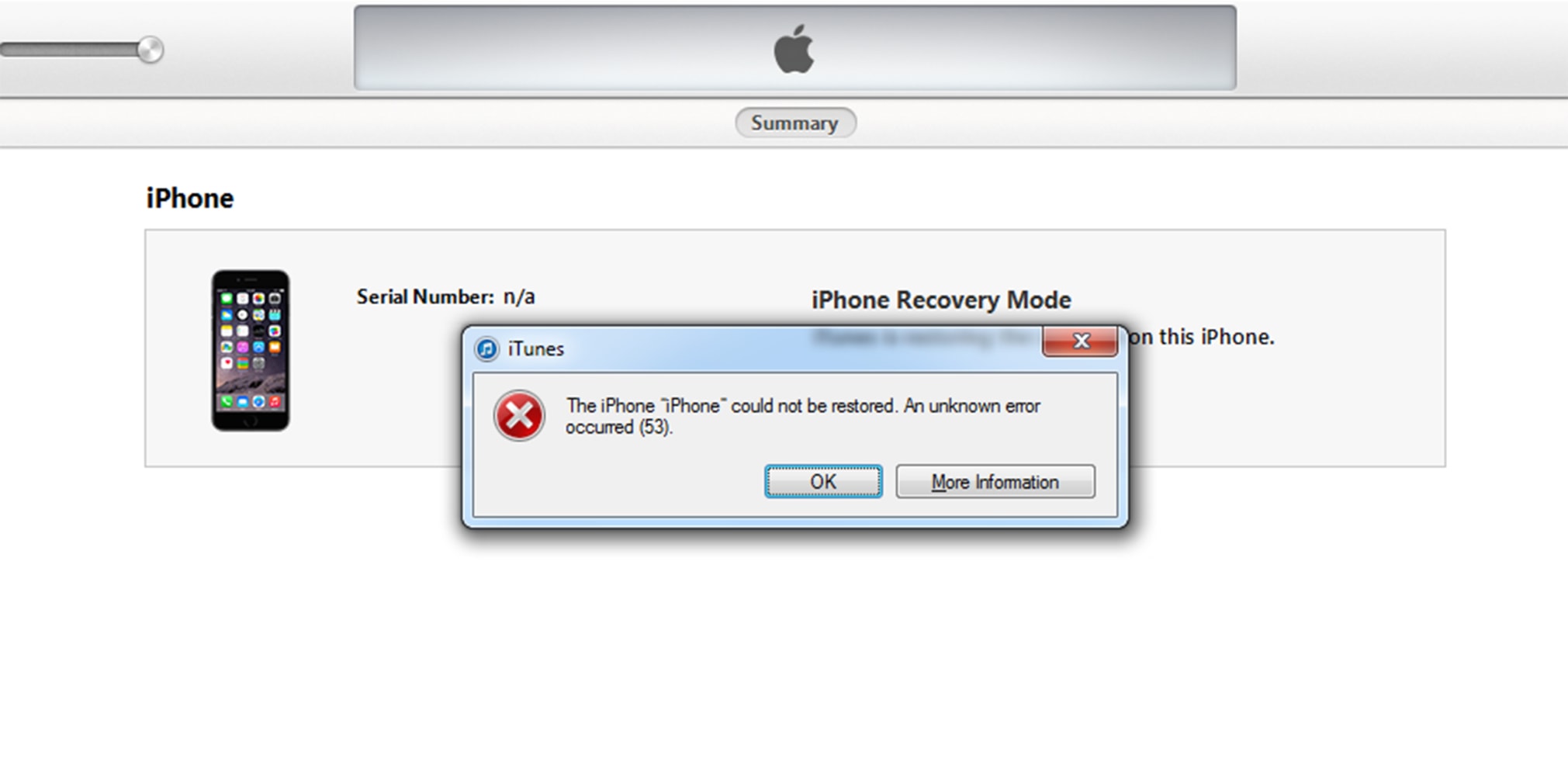
There are numerous accounts online from users who have had their screens or home buttons repaired by a third-party, and when they try to upgrade their software, the update gives an error message that reads: "The iPhone '[device name]' could not be restored. An unknown error occurred (53)."

Image: Iphone Error

iphonehelping.com

Needless to say, iPhone users who receive this message are frustrated.
"Bricking [disabling] the phone so that you can't even recover the photos on it is ridiculous. Imagine, for example, you go on honeymoon to somewhere really pretty that doesn't have an official Apple store. You take some pictures of you and your beloved with your iPhone. Unfortunately you drop it, and break the home button. You get it fixed at a local repair place and take a few more gorgeous photos. Then the phone updates and [...] YOU GET NOTHING," user iey404 said on Reddit.
"I work for a company that repairs iPhones and we refurbish thousands of iPhone 6. We have tried everything under the sun to get around this error but it is simply not possible. If someone brings in an iPhone 6 for repair and the home button is damaged in any way, we tell them up front the phone is unrepairable and we won't take it," user Facebomb Wizard also said on Reddit.
Jenna Burdett, who runs a website called iPad Rehab, fixes Apple devices for a living and blogs about it. She posted a YouTube video titled "iPhone6 Error 53 Solutions." In it, she says the iPhone's Touch ID sensor inside of the home button is married to the CPU on the motherboard, which means you can't take a home button from one phone to another and retain the Touch ID function.
"If you had your screen replaced and the shop that replaced it for you did no keep the original home button, that's where the problem comes in."
"There is no amount of restoring that will clear error 53 to get rid of it — you have to have the original home button," Burdett said.
Some observers have speculated that Error 53 is the company's way of imposing a monopoly on repairs. Others say it could be Apple's way of trying to prevent theft of your data after security is tampered with. 
Until now, Apple's only official statement on the issue has been that the issue is real and that it is due to security for fingerprint data that relates to Touch ID. But in a statement to NBC Friday, a company spokesperson said, "We take customer security very seriously and Error 53 is the result of security checks designed to protect our customers. iOS checks that the Touch ID sensor in your iPhone or iPad correctly matches your device's other components. If iOS finds a mismatch, the check fails and Touch ID, including for Apple Pay use, is disabled. This security measure is necessary to protect your device and prevent a fraudulent Touch ID sensor from being used. If a customer encounters Error 53, we encourage them to contact Apple Support."
Apple's statement suggests this is the price iPhone users must pay to secure their fingerprints, which can provide access to a slew of sensitive data.
If you've encountered this problem and your phone is still under warranty, your best bet is to visit an Apple store and give them your phone to be repaired. They have special software to pair the home button with the motherboard, and can fix the error.