Showing posts with label apple news. Show all posts

Thursday, January 19, 2017

Apple updates GarageBand and Logic Pro X with iCloud File Sharing and Touch Bar support


Apple has made its music editing software more robust.
On Wednesday, Apple updated GarageBand for iOS and Pro Logic X for macOS, giving users the ability to share projects between the two music editing apps via iCloud File Sharing. This means that users can record music and share the recordings over the cloud to be edited in either app. Previously, you could import GarageBand recordings into Logic Pro X, but not vice versa. GarageBand has been designed to be more consumer-friendly, whereas Logic Pro X caters to the pro level.
In addition, GarageBand 2.2 for iOS got a redesigned sound browser, multi-take recording, and advanced studio effects like distortion and pitch correction. GarageBand now also has the Alchemy software synthesizer that was previously available on Logic Pro X.
As for Logic Pro X, the 10.3 update gives new MacBook Pro owners the ability to use the Touch Bar. Launching Logic Pro X will activate the Touch Bar, so that you’re able to view projects in a timeline, as well as tinker with a music track by changing the volume, adjusting the controls, and selecting different software instruments.
These new software updates are free for existing users. Logic Pro X for Mac costs $200 and GarageBand is $5, although it comes pre-installed on the latest iOS devices.
Why this matters: GarageBand on iOS and Logic Pro X for macOS started out by catering to different types of users—consumer versus pro. But with this new update that enables iCloud File Sharing between the two, Apple is hoping that GarageBand could give Logic Pro X users a mobile-friendly way for on-the-go editing.


Please visit our websitewww.pixotrigames.comhttp://pixotritechnologies.com/  

Thursday, January 12, 2017

Apple is already winning the wireless headphones market with AirPods


Despite delays, Apple’s AirPods had a great holiday season according to a new report on wireless headphone online spending over the past several weeks.
The report from Slice Intelligence–which collects its data from hundreds of millions of anonymized e-receipts–found that the $159 AirPods have accounted for more than a quarter of all online wireless headphones revenue since pre-orders for the product launched on December 13.
The report also finds that the AirPods pre-order launch was the biggest day for online headphone sales of the year, outpacing sales on Cyber Monday and Black Friday. A major part of this is no doubt related to the fact that the headphones had a pretty limited launch in retail stores due to low supply caused by manufacturing delays.
Apple already had a major presence in the wireless headphone market previous to the AirPods launch thanks to various wireless models of the company’s Beats headphones. The Slice data shows that in 2015 and 2016, around 24 percent of wireless headphones sold online were Beats-branded.
Headphones are by and large continuing to gain bluetooth connectivity, Slice claims that nearly 75% of headphones purchases bought online this holiday season were of the wireless variety.
Of the many takeaways emerging from CES this year on the consumer hardware front, one of the clearest was that wireless earbuds are in a clear period of growth moving into next year. As more phone manufacturers plot ditching the headphone jack, it seems to be an inevitable direction for the industry to head. The AirPods are some of the most polished wireless earbud solution currently available and are actually a bit cheaper than most options, though they’re still quite expensive.
There really haven’t been any product entrants in the wireless earbud space from legacy audio companies to date, so whether this market position will sustain itself for Apple depends on them innovating the product category itself as they seek to reinvent what all a headphone can really do.

Please visit our websitewww.pixotrigames.comhttp://pixotritechnologies.com/  to take a look at our current projects and also some of our upcoming games.

Saturday, February 6, 2016

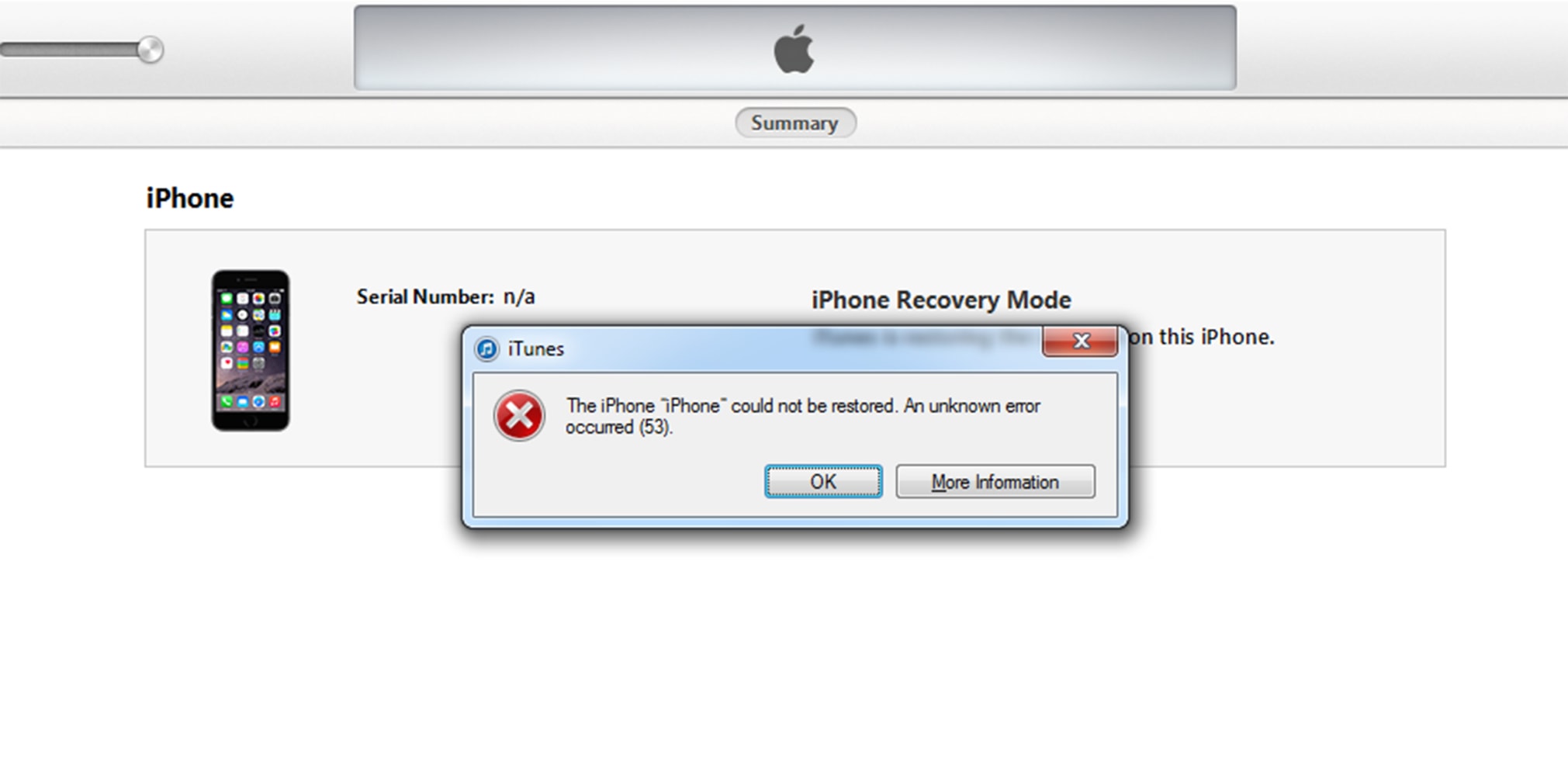
Error 53: Latest iOS Update May Brick Your Phone If You Did This


If you've had the screen or home button replaced on your iPhone and the work wasn't done by someone at the Apple Store, you may want to skip the latest iOS update.
Apple's iOS 9 update has a little-known feature that will render your iPhone 6 and 6 Plus about as useful as a brick if you've had it repaired by anyone but an Apple technician.
There are numerous accounts online from users who have had their screens or home buttons repaired by a third-party, and when they try to upgrade their software, the update gives an error message that reads: "The iPhone '[device name]' could not be restored. An unknown error occurred (53)."

Image: Iphone Error

iphonehelping.com

Needless to say, iPhone users who receive this message are frustrated.
"Bricking [disabling] the phone so that you can't even recover the photos on it is ridiculous. Imagine, for example, you go on honeymoon to somewhere really pretty that doesn't have an official Apple store. You take some pictures of you and your beloved with your iPhone. Unfortunately you drop it, and break the home button. You get it fixed at a local repair place and take a few more gorgeous photos. Then the phone updates and [...] YOU GET NOTHING," user iey404 said on Reddit.
"I work for a company that repairs iPhones and we refurbish thousands of iPhone 6. We have tried everything under the sun to get around this error but it is simply not possible. If someone brings in an iPhone 6 for repair and the home button is damaged in any way, we tell them up front the phone is unrepairable and we won't take it," user Facebomb Wizard also said on Reddit.
Jenna Burdett, who runs a website called iPad Rehab, fixes Apple devices for a living and blogs about it. She posted a YouTube video titled "iPhone6 Error 53 Solutions." In it, she says the iPhone's Touch ID sensor inside of the home button is married to the CPU on the motherboard, which means you can't take a home button from one phone to another and retain the Touch ID function.
"If you had your screen replaced and the shop that replaced it for you did no keep the original home button, that's where the problem comes in."
"There is no amount of restoring that will clear error 53 to get rid of it — you have to have the original home button," Burdett said.
Some observers have speculated that Error 53 is the company's way of imposing a monopoly on repairs. Others say it could be Apple's way of trying to prevent theft of your data after security is tampered with. 
Until now, Apple's only official statement on the issue has been that the issue is real and that it is due to security for fingerprint data that relates to Touch ID. But in a statement to NBC Friday, a company spokesperson said, "We take customer security very seriously and Error 53 is the result of security checks designed to protect our customers. iOS checks that the Touch ID sensor in your iPhone or iPad correctly matches your device's other components. If iOS finds a mismatch, the check fails and Touch ID, including for Apple Pay use, is disabled. This security measure is necessary to protect your device and prevent a fraudulent Touch ID sensor from being used. If a customer encounters Error 53, we encourage them to contact Apple Support."
Apple's statement suggests this is the price iPhone users must pay to secure their fingerprints, which can provide access to a slew of sensitive data.
If you've encountered this problem and your phone is still under warranty, your best bet is to visit an Apple store and give them your phone to be repaired. They have special software to pair the home button with the motherboard, and can fix the error. 

Monday, June 15, 2015

Apple MacBook Pro (15-inch, 2015) review:

le's MacBook Air and Pro lines have remained steadfastly rock-solid in their look and feel for several generations. Each year brings a handful of tweaks and updates, typically only to internal components, from better hard drives to faster Wi-Fi to new processors. It's only because both the Air and Pro designs were so far ahead of the curve when first introduced that these laptops still look so up-to-date.

For 2015, nearly every MacBook has received an update of a some kind, although these have largely been of the blink-and-you'll-miss-it variety. Both the MacBook Air and 13-inch MacBook Pro have moved up to Intel's fifth-generation Core i-series processors, also known by the codename Broadwell, while the 13-inch Pro also added Apple's new Force Touch trackpad.

That clickless touchpad, which uses four sensors and some haptic feedback rather than a traditional hinge, was one of the highlights of the new 12-inch MacBook, a low-power, 2-pound ultraportable that was Apple's sole new laptop design in years.


Compared to all the changes listed above, and the entirely new 12-inch MacBook, the 15-inch MacBook Pro feels like it's been slighted in the update department. The 15-inch Pro gets the Force Touch trackpad, and a faster solid-state hard drive, plus updated graphics in the form of an AMD Radeon R9 M370X GPU. But arguably the most important component upgrade is missing, as the Core i7 CPU here is the same as last year's model (the fifth-gen Core i7 chips from Intel are only starting to trickle out now).

Despite the lack of major changes, the 15-inch MacBook Pro remains Apple's biggest and most powerful laptop, and a great all day, everyday productivity machine, especially if you need the extra GPU power for photo or video work, or the generous screen real estate the 15-inch Retina panel provides.

Prices stay the same, at $1,999 for the base model (£1,599, AU$2,799) and $2,499 (£1,999, AU$3,499) for our upgraded test unit, with a bigger 512GB hard drive and the AMD graphics. That makes this a major investment, especially compared with the 13-inch Pro, which can be had for as little as $1,299 (£999, AU$1,799). Unless you specifically need the size, power or features of the 15-inch MacBook Pro, that 13-inch model is our current pick for the most universally useful all-around MacBook.

Design and features

With only some minor internal changes, this MacBook Pro looks identical to the one we reviewed in mid-2014, and in fact the product design has only slightly changed since 2012.


Aside from being a year older, most of our impressions about the design of the last several iterations of this laptop remain the same.

The 15-inch MacBook Pro is slim, but with a wide desktop footprint. Especially compared with newer, lighter laptops, it feels denser than it looks at first glance, but with that comes a certain sense of indestructibility, thanks to the flex-free aluminum construction. It's not a carry-all-day-every-day package, although one could tote it around to and from work, or on the occasional day trip without much trouble.

The keyboard remains essentially the same as seen on the last several generations of MacBook. Other laptops have matched, but not surpassed, the backlit Apple keyboard, with the possible exception of Lenovo, a company that invests heavily in keyboard design and development.

New for this year, however, is Apple's Force Touch trackpad. Already available in the 12-inch MacBook and the 13-inch MacBook Pro, the Force Touch trackpad eliminates the top hinge that previously required you to physically depress the glass top of the pad, usually from somewhere on the lower half to register properly. Instead, the new pad places four sensors under the pad, one under each corner. This replaces a design some describe as a "diving board" with one that's a simple, flat surface.

The four sensors make it so you can "click" anywhere on the pad's surface with identical results, and the Force Click effect, which combines the sensors with haptic (or "taptic") feedback, allows you to have two levels of perceived clicking within an app or task. That deep click feels to the finger and brain like the trackpad has a stepped physical mechanism, but in fact, the movement you feel is a small tactile haptic tap, which, even when fully explained, still feels like you're depressing the trackpad two levels.

On one hand, it's a brilliant bit of engineering that will help future laptops be thinner, with fewer moving parts. On the other hand, it's so seamlessly done, you might never notice the difference.


Sunday, June 14, 2015

WWDC Puts Accessibility On The Radar For Developers

That’s Apple’s slogan for this year’s Worldwide Developers Conference (WWDC), and it resonates with me in a special way.

Event after event, Tim Cook makes a point to remind the audience that Apple’s ethos is to build best-of-breed products that change people’s lives. I believe Cook to be sincere for no other reason than the work the company does in supporting accessibility. In iOS and OS X. Apple has made good on their word to changing people’s lives by continually improving the tools that, quite literally, change the way a person with disabilities (such as myself) uses an iPhone and iPad.


But it isn’t only Apple who’s doing good. Third-party developers have a responsibility to incorporate accessibility into their apps as well, and that’s where WWDC comes in. Apple provides numerous resources to developers during the conference that help he or she ensure that their app(s) are as accessible as possible.

The accessibility presence at WWDC is deep and far-reaching; Apple does much to raise awareness of and advocate for the accessibility community. Apple this week granted me behind-the-scenes access to sessions, labs, and developer interviews at Moscone so as to tell WWDC’s accessibility story.

Sessions

Arguably the most important aspect of WWDC from a developer perspective are the sessions. This is where Apple engineers present information about APIs and demonstrate how developers can integrate them into their apps. As there are sessions dedicated to things like user interface design and privacy, so too are there ones for accessibility.

Sessions are helmed by a member of the respective platform’s Accessibility team. There are dedicated sessions for iOS, OS X, and new for 2015, Watch OS. In broad strokes, the accessibility sessions are about best practices for supporting accessibility. The presenter  focuses on an attribute of Accessibility like, say, VoiceOver, and demonstrate how to properly integrate it into an app, making it work with labels and images. Troubleshooting techniques and tips and tricks are also discussed.

The technical aspects of the sessions related to coding went largely over my head, but I did learn a few things that I didn’t know before. For instance, some UI mechanics of Apple Watch related to the digital crown and the Zoom feature, where a user can turn the crown to move line by line when reading text with Zoom turned on.

Framework Labs

As with the sessions, the Frameworks Labs are an integral part of a developer’s experience at WWDC. Here, developers can meet with Apple engineers to get help and ask questions about their app. Developers can demo their app to engineers, and get real-time feedback on what works and what doesn’t. Engineers are even able to look at and make suggestions for an app’s code so as to make it work as it should.

These Frameworks Labs extend to accessibility as well. Members of Apple’s Engineering and Accessibility QA teams are on hand to answer developers’ questions about supporting Accessibility. As well, there is opportunity for “accessibility audits,” where an engineer will sit down with a developer’s app and give feedback. It is during these times where an engineer will determine whether a feature such as VoiceOver is functionally properly, and give tips as needed.

Apple told me that press access to the labs was unprecedented, so I made sure to soak up every second of my time there. It was a bustling place, with people huddled at tables chattering about things like VoiceOver and Large Dynamic Type.

To me, the labs were one of the most exciting part of my visit. It seemed to me that the labs are where the action is at WWDC. Developers want to visit the labs because they’ve gone to sessions and want to implement accessibility (among other things) the right way.

The room was full of enthusiasm, which warmed my heart to see. As a person with disabilities, it’s thrilling for me to see others make concerted efforts to ensure that their apps are usable by all.

Interviews With Developers

I had an opportunity to speak with several developers, and my high-level take of our discussions is this: they care — deeply so.

What I mean by “care” is the developers I spoke to shared genuine feelings of empathy and a desire to change the world for the better for people like me. They want everyone with an iOS device and/or Apple Watch to enjoy their apps just as much as the fully-abled do.

Of the many developers I spoke with, there were three conversations that especially stood out.


First is the team behind the iOS automation app, Workflow. I’ve known about Workflow for a while and have it on my devices, but have mostly ignored it due to being intimidated by its power. Still, I jumped at the chance to sit down with Workflow’s three-person creative team: Ari Weinstein, Conrad Kramer, and Nick Frey.

In terms of accessibility, Workflow is noteworthy insofar that it’s the first app to win an Apple Design Award for accessibility. (Of note, Apple’s made the ADA ceremony available online. At the 35:00 mark is the Workflow demo, done by two Apple accessibility engineers who are blind.)

Weinstein and his team gave me a demo of their app, and explained to me that their focus, accessibility-wise, was on the visually impaired. Workflow uses VoiceOver to guide users in creating workflows by announcing selected actions and where they’re supposed to be placed in a sequence. It works very well.

Weinstein explained to me that the impetus for supporting VoiceOver was the comments he and his team received from the accessibility community. He said that many users with vision impairments were curious about Workflow and wanted to try it, and asked that the app be made accessible to them. Moreover, Weinstein stated that supporting accessibility felt like the right thing to do.

What strikes me about Workflow is not only its capability but that capability is available to the visually impaired. Here’s an app that can automate many tasks, which not only is convenient but practical. For many visually impaired users, getting directions home, for example, can potentially be cumbersome because of the visual strain required to orient one’s self to the Maps interface — e.g., find the correct buttons to tap, etc. Workflow lets you do this with just one tap.

I met with AssistiveWare founder & CEO, David Niemeijer, who demoed two of his company’s apps to me, Keedogo and Proloquo2Go.

Keedogo is a iPad keyboard designed for elementary-aged children, and has many accessible traits. (I wrote about Keedogo in more detail for MacStories last year.) Proloquo2go, also for iPad, is an app designed for non-verbal children, particularly those with autism. It’s based on the PECS system, a teaching methodology designed specifically for children with autism in order to facilitate expressive language.

It was obvious from speaking with David that he is invested in the welfare of those who use his products. He, too, wants to make a difference in the lives of people of all abilities and needs. Something David said that has stuck with me is the fact that the tools he builds are only possible because Apple built the developer frameworks in the first place. Apple’s tools, he said, are so good that it makes his job making stuff like Proloquo2go that much easier.

During Monday’s keynote, Apple showed a video featuring various developers and their apps, while also discussing the impact apps have had on the world and the iOS ecosystem.

I had a chance to sit down with one of the developers in the film, Raphael Augusto Silva. Silva is the co-founder and lead developer at the Ludwig Project.

His app, an iPad piano, stands out because he and his team wish to bring music to the hearing impaired. The idea, Silva told me, is that the hearing impaired can sense music through vibration. Tapping the keys on the iPad’s screen will register a tactile sensation on the attached wrist strap; the more taps, the more you feel. The concept is that the hearing impaired will be able to experience beats through this form of haptic feedback.

While imperfect right now, the concept is wonderfully ambitious. As someone who grew up with deaf parents, I am keenly aware of the uniqueness of the deaf community and the issues they face. Thus, Silva’s app is something I was immediately drawn to, and it was terrific talking with him.

Closing Thoughts

The comment from Cook about not always doing things for “the bloody ROI” feels not at all like an empty bromide.

My experiences at Moscone this week serves as further confirmation that Apple isn’t about lip service in this regard. While accessibility is and always will be somewhat of a niche, it’s wonderful to see Apple go to such lengths to prioritize accessibility.

We (the accessibility community) are on Apple’s radar, and, in my view at least, it feels great to be acknowledged.

Thursday, June 11, 2015

Apple Increases Test Device Limits For Developers, Hinting At Plans For Apple TV Apps

Following the consolidation of Apple’s developer programs under one roof, the company has also made a slight, but perhaps notable, change with regard to the number of devices developers can register under their accounts. Previously, developers were able to register 100 individual devices, but that number has now been increased to 500 with each platform now receiving 100 device slots apiece. Each platform, meaning iPhone, iPad, iPod touch, Apple Watch, and Apple TV. Wait, what’s that? Apple TV?


Yes, Apple has now allotted 100 slots for Apple TV alone – a software platform that doesn’t yet include its own App Store, though one has long been rumored to be in the works.

In fact, word has it that Apple has been working on an upgrade to Xcode which would include developer tools that help app makers build third-party applications for Apple TV. However, according to The New York Times, Apple’s plans to introduce a new version of Apple TV at this year’s WWDC were reportedly postponed because the product was not yet ready. The forthcoming Apple TV hardware is said to include under-the-hood improvements as well as an App Store of its own and an Internet-based TV service, the latter of which has all but been confirmed. (Apple TV has supported TV apps, but only from select partners, not a full App Store.)

Developers use the registration slots Apple provides to test their apps ahead of an App Store public launch, as well as to test new versions of Apple software, like iOS releases.

That Apple TV is listed as a supported device type for developers to register with Apple is not exactly new, however, or what’s important to note about this change. As several developers have already now pointed out, Apple TV was included as an option here in the past. That’s because developers could install beta builds of Apple TV software, and they would need to add Apple TV to a device list for the purposes of AirPlay beta testing.

One could argue that giving each platform an even 100 slots could have just been done for simplicity’s sake. But if it’s only meant for beta testing Apple TV software, 100 slots for Apple TV seems a little high. At least, that’s the theory.

Instead, what seems likely is that Apple has made the change in advance of its intention to open up the Apple TV platform to third-party applications and games. Presumably, once developers are able to build apps for Apple TV, they would need a larger number of testing slots – something that’s more on par with other devices, like iPhone and iPad, for example.

MacRumors, which reported on the increased limits after developers began tweeting about the changes to their account, noted also that some developers were bumped up to 200 devices a couple of years ago, but the increase to 500 devices is certainly new and more of a universal change.

The device limit increase is far from being definitive proof of Apple TV’s App Store plans, but it’s at least another hint of what’s to come.

The   Bubble  Boy

The Bubble Boy is an entertaining game for kids and all age groups.
Download this free game: 
Pop the maximum amount of bubbles without losing lives.
Soothing visuals and engaging sounds for immersive game play.
Choose between two difficulty settings. Easy and Hard.
Pop the power up bubbles to earn additional points.
Beware of the naughty bubble. If popped you will lose a life.
No Ads while playing.

Tuesday, June 9, 2015

The Five Big Things to Watch For at Today's Apple Event

Software will be the star of Apple Inc.’s big event today.

The maker of iPhones and iPads will introduce software improvements for its computer and mobile devices at its annual developer conference for more than 5,000 engineers in San Francisco. The conference, called WWDC, starts Monday with a reveal of new updates, including the introduction of a revamped streaming music service, people familiar with the plans have said.


Apple depends upon third-party app developers to create software that help make its devices popular. The annual event allows Apple to encourage its partners along with directing them toward future developments. Apple application developers were paid $10 billion last year and $25 billion since the App Store was introduced, the company said in January.

“Apple needs to maintain its momentum and thought leadership coming out of WWDC,” Frank Gillett, an analyst at Forrester, wrote in an e-mail. Here's what to look for:

The Beats Go On

Apple’s new music app will be home to the subscription service, downloads and a revamped version of iTunes radio, people familiar with the effort have said. It will include some exclusive, behind the scenes video. Apple has hired executives to help shoot and produce video from recording sessions with willing musicians. The app will also feature artist pages — mostly seen as being promotional — that they can use to host videos, songs and other things for free. This is part of a program called Apple Connect. Apple will compensate the artists and labels for songs it gives away, as it has done with iTunes' "Free Song of the Week" feature.

Going Native

A software development kit will be previewed that will give engineers the ability to write programs on the new Apple Watch directly and access to the device’s sensors, Jeff Williams, Apple’s senior vice president of operations, said last month at the Re/code conference. That new ability could help speed up third-party apps on the Watch, one of the big gripes since the device went on sale in April.

Apple Pay

Apple’s mobile payment service, which began last year, may get some enhancements including a rewards program that is seen as a way to keep consumers using the service, the New York Times reported.

A key question is whether Apple will disclose any numbers on usage, and whether the company has had any success in signing up more financial partners.

Seeing Double

The new mobile operating software may for the first time allow for two apps running on an iPad to be shown at the same time, according to 9to5Mac. This could be helpful later this year as Apple pushes for more sales to business customers with the introduction of a larger-screen iPad.

Operation

Both OS X and iOS may see improvements to enhance performance. IOS 9 may look similar to the current mobile operating system but include  such items as beefed up security and additions to Maps, including mass transit directions, according to 9to5Mac. Apple may also have a competitor for Google Now, essentially a predictive personal assistant, code named Proactive that works to better integrate data on a user’s device, the website reported.

Game development 

The employees at Pixotri Game Studio have vast experience in creating games and are always trying to push the boundaries of technology and creativity. The games are created using the most popular game enigine Unity, which provides robust, high performance, platform independent solution to creating games.

Pixotri technology is a  creative house developing quality web designs, E-Commerce solution. SEO services and Gaming development .
Contact us for your mobile gaming requirements email-info@pixotritechnologies.com. Visit our website: www.pixotritechnologies.com

Monday, June 8, 2015

Hands-on with Apple’s new OS X El Capitan

The new user-facing features in Apple’s new OS for Mac — OS X El Capitan — are relatively small and focused, and they could save users a lot of time in the long run.


Apple unveiled El Capitan Monday, and we were eager to get our hands on it after seeing the demo at Apple’s Worldwide Developers Conference.

Much of the new technology in the release focuses on stability and privacy issues, but there are some cool new user-facing innovations, too. Many of them seem focused on removing small friction points from the various apps and interfaces in the OS. After using them for awhile I can see that the small efficiencies they may add to one’s workflow every day could really add up.

One simple example happens when you first jump on the computer and you want to locate the cursor. You move a couple of fingers over the touchpad a little bit, and the cursor shows up in super-size for a second so that it’s easy to see.

Mission Control helps deal with clutter

One of the biggest changes brought by El Capitan is an improvement in windows management. Mission Control — the screen that zooms way out to show you your desktop and all the apps you have open — gets a couple of new features that I know I’ll use a lot.

For work I usually have lots of Windows open and I need a way to quickly recognize what’s open, where everything is, and how to open the app or window I need.


In Mission Control you can now pin any window to a new area called the Spaces Bar along the top of the screen. If you’re repeatedly opening and closing a specific app, the new Spaces Bar makes it easy to quickly grab the app and reopen it.

Split View for multi-tasking

Cooler still is the Split View feature that can be used to automatically position two app windows side-by-side in full screen so you can work with both apps at once. For instance, you can keep your Notes app open on one side of the screen while you do research in Safari on the other side.

To activate the feature, you press and hold on the red dot at the upper right of any window, and then move that window to the left or right when prompted. On the other side of the screen the OS shows you all the other windows you have open, so you just choose the one you want.


You can adjust the width of both windows when you want one to be larger. If you’re in the habit of using the Notes app, you’ll love the ability to drag links and images from Safari straight into Notes.

I found the feature easy to activate and control, but only time will tell how often I use it.

Apple also added a little speaker icon in the main URL bar that you can click to silence the annoying auto-play ad that’s playing in one of your tabs somewhere. You can click and hold on the icon to identify the offending tab, and quickly close the page. Very easy to use, and very useful.

New Mail tricks

In the Mail app you can now swipe left on an email you no longer want, and it goes to the trash. I’m not sure I would use this very much, and I’m afraid I might disappear something accidentally. Also added to Mail is the ability to compose in full screen in separate tabs, and the ability to drag images from an email into a draft email. Slick.


Spotlight learns English, sort of

The Spotlight function in El Capitan now understands natural language searches, Apple says. I had mixed results with it. Spotlight was, for example, able to find the weather in Denver today (from a third party Weather site), but it came up blank when I asked it for the weather in Denver this Friday.

Performance

Again, the new OS focused on system stability and performance increases. Apple says El Capitan is up to 1.4 times faster at launching apps than Yosemite, and as much as two times faster at launching and switching between apps. I didn’t pull out a stopwatch, but I’m used to using Yosemite, and El Capitan does seem pretty zippy by comparison.

Apple released this next version of OS X to developers Monday, and will push the OS into public beta this July. A final, more stable version of the OS will become available as a free download this fall. Any user currently running Yosemite will be able to run the new OS, Apple said.

THE BUBBLE BOY

The Bubble  Boy - Free fun Game  for windows app store!!

The Bubble  Boy - Free fun Game  for Google play store!!

The Bubble Boy is an entertaining game for kids and all age groups.
Download this free game: 
Pop the maximum amount of bubbles without losing lives.
Soothing visuals and engaging sounds for immersive game play.
Choose between two difficulty settings. Easy and Hard.
Pop the power up bubbles to earn additional points.
Beware of the naughty bubble. If popped you will lose a life.
No Ads while playing.


Friday, June 5, 2015

Apple TV usage is surging -- at the expense of Mac

Apple TV appears to be the hobby people keep coming back to.

The computer maker's streaming-media box saw its share of TV Everywhere viewings doubled at the beginning of this year from the end of last, outstripping main rival Roku, according to a report from Adobe.


That may not be a home run for Apple: It appears much of the growth is people swapping in their Apple TV for the online video they previously watched on desktops and laptops.

"If you look at the Mac access, it's dropping," said Tamara Gaffney, a principal analyst for Adobe Digital Index and the lead analyst on the latest report. "For Apple, they're transitioning the lover of their computers into a lover of the Apple TV device."

Online video is exploding, as more people watch on-the-go from mobile devices and more programmers put in-demand content on the Web. That's created a boon for makers of so called "over-the-top" boxes like Apple TV, which hook up to televisions to play online video on the living room's big screen. But for Apple, this rapid growth could have hidden dangers: It means demand is soaring for one of its lowest priced products at the expense of some of its priciest, and it means the services on streaming-media boxes grow in importance compared with the hardware.

Adobe examined consumer video viewing and browsing behavior from the first quarter of last year through the first quarter of 2015. The data was aggregated from more than 500 billion visits, more than 200 billion online video starts and 2.8 billion TV Everywhere authentications for premium video content.

TV Everywhere is the traditional TV industry's gateway system for putting their shows online -- if you've ever been asked to enter your cable or satellite service password before viewing a show or a movie, that's a TV Everywhere authentication.

Adobe found that Apple TV represented 10 percent of TV Everywhere authentications in the first quarter, up from 5 percent in the final quarter of last year. That surpassed Roku, which had an 8 percent share in the latest period, up one percentage point. Gaffney said the data indicated Apple TV was a popular holiday present and noted its share may jump again once Adobe can examine data collected after Apple cut the price of the box to $69 from $99 in March.

A caveat about these standings: TV Everywhere authentications aren't the full picture of online video viewing. They don't include time spent watching free video and content delivered by subscription services like Netflix.

The   Bubble  Boy

The Bubble Boy is an entertaining game for kids and all age groups.
Download this free game:
https://play.google.com/store/apps/details?id=com.PixotriTechnologies.bubbleBoy&hl=en
Pop the maximum amount of bubbles without losing lives.
Soothing visuals and engaging sounds for immersive game play.
Choose between two difficulty settings. Easy and Hard.
Pop the power up bubbles to earn additional points.
Beware of the naughty bubble. If popped you will lose a life.
No Ads while playing.


Tuesday, June 2, 2015

Tim Cook says privacy is an issue of morality

Technically Incorrect: Implicitly criticizing the likes of Google and Facebook as gobblers of personal information, the Apple CEO makes a strong plea for respect of people's personal selves.

Have we come a long way since Mark Zuckerberg insisted that people didn't actually want privacy at all?

Zuckerberg has. He's even defended his own legally.

It's not clear, though, just how much the likes of Facebook and Google care about the privacy of all those who use its free services. This is certainly Tim Cook's point of view.

Speaking on Monday to the Electronic Privacy Information Center's Champions of Freedom Awards Dinner, Apple's CEO positively railed against companies in his own backyard.

As reported by TechCrunch, he said: "I'm speaking to you from Silicon Valley, where some of the most prominent and successful companies have built their businesses by lulling their customers into complacency about their personal information. They're gobbling up everything they can learn about you and trying to monetize it. We think that's wrong. And it's not the kind of company that Apple wants to be."

It's not hard to imagine that among the "prominent and successful companies" were Google and Facebook. Indeed, he went on to offer some of his darkest thoughts about what companies such as these do with people's data.

He said: "You might like these so-called free services, but we don't think they're worth having your e-mail, your search history and now even your family photos data mined and sold off for God knows what advertising purpose. And we think some day, customers will see this for what it is."

That's a quaint hope. People are far too enamored with all the amusements that the Web offers. If they have a belief at all, people unconsciously hope that the likes of Google and Facebook don't care about your actual life. They're just using your information to make money.

Cook, though, presented the issue in deeply political terms. He said: "We believe that people have a fundamental right to privacy. The American people demand it, the constitution demands it, morality demands it."

Morality is a feast that moves as it's eaten. It's admirable that Cook would appeal to our moral core, but how much is there left? And how many can identify it?

Part of the problem, of course, is that the American people haven't really demanded privacy at all. They might offer the occasional lip service. Equally, though, we twitch our digital fingers nonstop in order to post more and more things about ourselves for more and more people. The quest for some tiny level of approval and fame -- which the likes of Facebook and Instagram offer -- is too much of a lure for most.

It may well be that future generations will have a collective moment where they reassess the moral concept of privacy. I'm not sure they've had it yet. The (empty) benefits are too great.

Though Cook was awarded by EPIC for his "corporate leadership" in the privacy area, the question is how much of his thinking will change the behavior of ordinary humans, as well as the people that are corporations.

SEO solution

We employ a variety of proven recommended techniques to increase your chance for top rankings.These include optimizing your website's page,content,and structure to drive traffic to your site for specific keyword research.Pixotri technology is a  creative house developing quality web designs, E-Commerce solution. SEO services and Gaming development .

Contact us for your SEOrequirement. email-info@pixotritechnologies.com. Visit our website:        www.pixotritechnologies.com
https://www.youtube.com/watch?v=T9xSWDsTYC8

The first 5 HomeKit accessories are finally here

Flipping the switch

Apple introduced HomeKit, a framework that puts iOS in your connected home accessories, at last year’s Worldwide Developers Conference. We’ve seen sneak peeks of HomeKit-compatible devices over the last six months, but buyers couldn’t get their hands on these products until Apple gave manufacturers the go-ahead.


On Tuesday, the first wave of HomeKit accessories finally went on sale. You can buy them today, though some are just available to preorder and won’t hit store shelves until July.

Animation

Our team of experts works with you, take your company message and create a powerful animated marketing video that will engage viewers in the most effective way possible.Pixotri technology is a  creative house developing quality web designs, E-Commerce solution. SEO services and Gaming development.

Contact us for your 2d and 3d animation requirements email- info@pixotritechnologies.com. Visit our website: www.pixotritechnologies.com

Friday, May 29, 2015

Apple buys augmented reality company Metaio

According to a report on 9to5mac, Apple has bought augmented reality company Metaio. This seems to be related to Apple’s plans to work on augmented reality for their Maps. 9to5mac included what looks like an official document from the German government to confirm the sale.


With the augmented reality feature, users can point their phone’s camera towards a building and see relevant information about it pop up on their phone’s screen. In Metaio’s demo video below, they also show how augmented reality can be used to see what your home will look like with new furniture or virtually checking out product information:

Mobile app development

Mobile’s strategy is the key to any business success in todays digital world. Pixotri technologies works one-on-one with businesses and individual product lines to develop a comprehensive mobile presence that complements your existing brand identity while building out your mobile brand. 

Contact us for your mobile app development requirements.email- info@pixotritechnologies.com. Visit our website: www.pixotritechnologies.com

Thursday, May 28, 2015

CBS would join Apple's TV service, if price is right


CEO Les Moonves says his broadcast network would "probably" be part of Internet-delivered TV from Apple. The deciding factor? Cold hard cash.


CBS Chief Executive Les Moonves teased the possibility of a deal with Apple to use its programming for an online-based service -- provided the world's most valuable company pays up.

"Apple TV is trying to change the universe a bit," Moonves said, speaking at the tech-news industry's Code Conference at a resort near Los Angeles. Asked what it would take to make a deal with Apple, his answer was succinct: "money."

Television programmers like CBS are warming to the Web as a place to offer their best content as consumers' habits shift to include more Internet viewing, which means you just need an online connection, rather than a cable TV subscription or bunny ears to access many of your favorite shows and movies. But the shift comes at the expense of traditional pay-TV packages, which are integral streams of revenue for programmers and why the content companies haven't rushed in to the online world.

The shift in mood comes as services like Netflix and those with live television purely online -- such as Dish Network's Sling TV, PlayStation Vue and an expected offering from Apple -- emerge as attractive options, while creating a new source of licensing fees for TV networks.

Moonves said on Wednesday that he's in an ongoing conversation with Apple, having met last week with Eddy Cue, Apple senior vice president of Internet software and services. "In any one of those bundles, we will be a part of it," he said.

(Disclosure: CBS is the parent company of CNET.)

Moonves said CBS' own purely online TV service, CBS All Access, was seeing "terrific" numbers, without specifying how many people have subscribed to product that lets people watch its broadcast network live and view a catalog of past programming on demand for a $6.99 monthly subscription.

He also said he held no grudge against Twitter app Periscope and Twitter CEO Dick Costolo after he declared the app the real winner of the boxing match between Manny Pacquiao and Floyd Mayweather. CBS' Showtime joined forces with its rival HBO to telecast the fight at top-dollar pay-per-view rates, but many people watched bits of the bout illicitly via Periscope.

"Dick is a decent guy, and he wrote me...and said it wasn't the intent of Periscope" to be a vehicle for piracy, Moonves said.

Digital marketing

Digital marketing helps you to find yourself in first place among the other competitors. We help you to strategically plan and execute your,product and services through our online platforms.Pixotri technology is a  creative house developing quality web designs, E-Commerce solution. SEO services and Gaming development .

Contact us for your Digital marketing requirements .email-info@pixotritechnologies.com. Visit our website: www.pixotritechnologies.com

How Google and Android benefited from Microsoft and BlackBerry’s blindness

If there’s one advantage Apple didn’t have when it released the iPhone, it was a head start. Years before the idea for the iPhone even crossed Steve Jobs’ mind, BlackBerry devices were absolutely killing it in the marketplace. Even Microsoft, which tends to get laughed at for missing important trends in the tech space, had been working on various Windows Mobile devices going all the way back to 2000.


While it’s easy and perhaps simple to attribute BlackBerry’s demise and Microsoft’s string of failures in the mobile space to the fact that neither company came up with the idea for an iPhone-like device themselves, that explanation completely misses the point. After all, Apple’s success over the last 15 years clearly demonstrates that being the first entrant in a new product category does not, in and of itself, guarantee success.

The reality is that both BlackBerry and Microsoft were completely blind to what the iPhone was. Which is to say, BlackBerry and Microsoft’s mobile troubles didn’t arise because they didn’t invent the iPhone, but rather because they completely ignored the future staring them right back in the face the moment Steve Jobs unveiled the now iconic smartphone to the world back in 2007.

Contrast Google’s reaction to Jobs’ iPhone announcement with what we now know about how both BlackBerry and Microsoft responded. In the 2013 book Dogfight: How Apple and Google Went to War and Started a Revolution, author Fred Vogelstein recounts the immediate panic that then Android head Andy Rubin felt after watching a live webcast of Jobs’ presentation while driving in a cab in Vegas. According to the story, Rubin knew right then and there that his Android team would have to completely rework the type of device they were working on. “Holy crap,” Rubin reportedly said at the time. “I guess we’re not going to launch that phone.”

The team members on Google’s Android team, to their credit, similarly recognized the superiority of what Apple had on its hands with the iPhone.

“We knew that Apple was going to announce a phone,” former Android team member Ethan Beard told Vogelstein. “Everyone knew that. We just didn’t think it would be that good.”

One of Google’s Android engineers recalled, “What we had looked so… nineties.”

Another Android team member, Chris DeSalvo, explained: “As a consumer I was blown away. I wanted one immediately. But as a Google engineer, I thought ‘We’re going to have to start over.'”

And so, the entire concept of what Android was supposed to be was scrapped and completely redeveloped, with the iPhone feature set now serving as the project’s new driving force.

And though early iterations of Android really lagged behind iOS, Google at the very least saw where the market was going and was able to adjust course mid-stream.

BlackBerry and Microsoft laugh off the iPhone as a serious threat

Now compare that panic and sense of urgency that permeated throughout Google’s Android team to how Microsoft and RIM took the news of the iPhone unveiling.

First up, let’s tackle Microsoft, if only because it gives us an excuse to show case this Steve Ballmer interview, taken in the wake of the iPhone announcement, where Ballmer dismisses the iPhone as a competitive threat.

The iPhone brought so many advancements to the market, and yet, Ballmer seems wholly preoccupied with the iPhone’s price.

BlackBerry’s reaction was no better.

While the company’s co-CEOs at the time were mildly impressed with some of the device’s features, they remained beholden to the tactile keyboards that had already made them so much money. And while they did eventually come out with the BlackBerry Storm, that product was effectively kickstarted at the behest of Verizon.

As BGR documented a few years ago, BlackBerry co-CEO Mike Lazaridis effectively had his blinders on for years after the iPhone debuted.


No excuse of ignorance

With the iPhone, Apple showed the world what the future of mobile communication was going to look like; multi-touch displays, intuitive software, fully functional web browsing. Whereas it took RIM and Microsoft a few years to appreciate the new reality they were living in, other companies, like Samsung for example, recognized right away that the tech landscape was shifting in sweeping and dramatic ways.

The unfortunate reality is that both BlackBerry and Microsoft didn’t need a magic crystal ball or some incredibly brilliant executive to tell them what the future of the smartphone market was going to look like. Google knew right away. Samsung knew right away. And even though the Palm Pre didn’t sell exceptionally well, the folks at Palm, clearly, also knew that the iPhone signaled a new era for the smartphone.

The tech industry moves pretty fast, as Ferris Bueller might say. Success, though, isn’t exclusively bestowed upon those who create the technological shifts that keep the industry exciting. Rather, success is also enjoyed by those companies insightful enough to recognize when a technological shift is occurring, something that both BlackBerry and Microsoft completely failed to appreciate even when it was happening right in front of their eyes.

Mobile app development

Mobile’s strategy is the key to any business success in todays digital world. Pixotri technologies works one-on-one with businesses and individual product lines to develop a comprehensive mobile presence that complements your existing brand identity while building out your mobile brand. Contact us for your mobile app development requirements.email- info@pixotritechnologies.com. Visit our website: www.pixotritechnologies.com


Apple is reportedly planning to add a rewards program to Apple Pay

As Google is reportedly revamping Android Pay, Apple, too, is apparently planning to update its own wireless payment system. According to The New York Times, the company is set to announce details about enhancements to Apple Pay at next month's WWDC conference, including a new rewards program that could benefit people who regularly use the mobile wallet.

The publication cites two sources reportedly briefed with Apple's plans, but doesn't offer any further details about what the rewards will entail, or how users will be able to get them. Nevertheless, a reward structure could entice people to start using Apple Pay over its competitors, cash, or credit cards, at a time when there still aren't that many solid reasons to do so.


Animation

Our team of experts works with you, take your company message and create a powerful animated marketing video that will engage viewers in the most effective way possible.Pixotri technology is a  creative house developing quality web designs, E-Commerce solution. SEO services and Gaming development .

Contact us for your 2d and 3d animation requirements email-info@pixotritechnologies.com. Visit our website: www.pixotritechnologies.com
https://www.youtube.com/watch?v=T9xSWDsTYC8

Wednesday, May 27, 2015

Apple drops hint firm is developing a car

Apple's operations chief Jeff Williams has dropped the biggest hint yet that the firm is developing a car.


Speaking at the Code Conference, he was asked about industries Apple might pursue with its large cash hoard.

His answer: 'The car is the ultimate mobile device.'
Williams then quickly added: 'We're exploring a lot of different markets.'

He said that the deciding factor in choosing new businesses is not the opportunity for revenue growth, but 'which ones are ones we think we can make a huge amount of difference.'

The answer comes a few months after claims that Apple has several hundred employees working secretly toward an Apple-branded electric vehicle.

However, when pressed, Williams referred to the potential for Car Play, a service introduced by Apple last year to allow drivers to access Apple services like iTunes music, maps and Siri through a vehicle's dashboard information system.

Williams also revealed Apple will next month will take a step toward making the Apple Watch more independent of the iPhone.

He said Apple will offer a developer kit to allow non-Apple apps to run apps natively on the Watch and access the device's sensors.

Until now, third-party apps have run on the iPhone, not directly on the Watch.

Williams said there are more than 4,000 apps available for the Watch.

The kit will be unveiled at Apple's developer conference starting June 8.

Williams said the new Watch apps will appear in the fall.

However, he refused to be drawn on how many devices had been shipped.

'Demand divided by supply is greater than one. That's all I've got. It's a lot,' he told interviewer Walt Mossberg.

He also revealed that over the recent holiday quarter, Apple shipped 74 million iPhones - so many that, if stacked they would reach the International Space Station.

'They were built, produced and shipped in 90 days,' Williams said.

He also hit back at questions about labour conditions at factories in China, and revealed that following a spate of suicides at one Foxconn facility in 2010, he and CEO Tim Cook personally investigated the issue.

'We learned it had nothing to do with working conditions,' Williams said, echoing an observation Apple co-founder once made about the suicide rate at Foxconn.

'[The factory had a] lower suicide rate at their biggest cluster than any place in the US.

'By that standard, it's the happiest place on earth.'

Williams also revealed Apple will next month will take a step toward making the Apple Watch more independent of the iPhone. Photo / AP
The interview can amid claims Apple has several hundred employees developing its own electric car at a secret lab.

Apple-owned cars was spotted fitted with Street View-style cameras.

'Dozens of Apple employees, led by experienced managers from its iPhone unit, are researching automotive products at a confidential Silicon Valley location outside the company's Cupertino campus,' the FT claims it was told by sources close to Apple.

It says the Apple research lab was set up late last year - meaning any car could still be years away.

It is believed Apple designer Sir Jonathan Ive is overseeing the lab, and the Bentley owning designer is known to be a car enthusiast.

The FT says one of its sources initially believe the project was Apple's in-car entertainment system, known as CarPlay - but now believes it is something more.

'Three months ago I would have said it was CarPlay. Today I think it's a car.'

The Wall Street Journal says that hundreds of employees are working on the project, codenamed Titan.

It says CEO Tim Cook approved the project close to a year ago with product design Vice President Steve Zadesky leading the group.

His LinkedIn page reveals he was previously an engineer at Ford.

'I love helping to create new product spaces and delivering challenging new technologies,' his biography says.

'At Apple I have been lucky enough to help build and lead the teams for the first iPod, first iPhone, all subsequent iPhones and iPods as well as hundreds of Apple branded accessory products.'

Zadesky 'was given permission to create a 1,000-person team and poach employees from different parts of the company.'

'The project, code-named 'Titan,' has an initial design of a vehicle that resembles a minivan,' its sources claim.

Apple also recently hired former Mercedes-Benz R&D head Johann Jungwirth, who joined Apple as a Mac systems engineering leader last fall.

A source claiming to be an Apple employee has hinted that the giant is developing a vehicle as part of a project that 'will change the landscape and give Tesla a run for its money.'

The email from the unnamed employee was sent to Business Insider.

It described 'vehicle development' at the company but didn't reveal further information.

In particular, Apple may be working on an electric car to rival Tesla's range or a self-driving car that would ultimately also rival Google's autonomous project.

The cameras on the mysterious van could be used to scan the road and help engineers develop self-driving software, for example.

The firm is also trying to poach staff from Tesla.

Apple is trying very hard to hire engineers away from Tesla Motors, Elon Musk told Bloomberg.

The CEO claims that the Cupertino company is gunning hard for his employees, offering them as much as $250K signing bonuses and 60% salary increases.

'Apple tries very hard to recruit from Tesla,' he said.

'But so far they've actually recruited very few people.'

This may seem like a leap for Apple to take, but it isn't the first time such projects have been discussed by the Californian firm.

In an interview last year, Apple board member Mickey Drexler said that before his death in 2011 Steve Jobs had considered building a car.

He told Paul Goldberger: 'Steve Jobs was gonna design an iCar. I think cars have an extraordinary opportunity for cool design.'

Alternatively, the Apple employee's email could be referring to an advanced iPhone in-car control system that would rival Tesla's software.

The Dodge van with the equipment on the top was spotted by the blog Claycord in San Francisco.

The blog owners apparently asked the driver what he was doing, but he refused to give an answer.

But a video from last year shows a similar car, which later transpired to be an unmarked self-driving Dodge caravan.

According to 9to5mac, the California Department of Motor Vehicles (DMV) confirmed the vehicle was leased to Apple.

With 12 cameras on top of the car, some have said that is too many for it to be a mapping car like Google's Street View.

'Too many cameras,' said technology analyst Rob Enderle.

'It has cameras that are angled down at all four corners of the vehicle.'

This would further lend itself to the self-driving car theory.

'Unfortunately for that theory, only six companies have been issued the permits necessary to test such vehicles, and Apple isn't one of them,' said 9to5mac.

'This brings us back to a much more likely conclusion: Apple is preparing to take on Google's Street View with a similar offering in its own Maps software.'

They said it might feature as part of the iOS 9 upgrade due later this year, although it would likely begin only with select cities such as New York and San Francisco.

This would plug a noticeable hole in Apple Maps, which has been missing Street View-style images ever since Apple made it the default maps app for iPhones.

When contacted by MailOnline, Apple declined to comment on the car in question or what its purpose was

Digital marketing

Digital marketing helps you to find yourself in first place among the other competitors. We help you to strategically plan and execute your,product and services through our online platforms.Pixotri technology is a  creative house developing quality web designs, E-Commerce solution. SEO services and Gaming development .
Contact us for your Digital marketing requirements . email-info@pixotritechnologies.com. Visit our website: www.pixotritechnologies.com