Showing posts with label google news 2015. Show all posts

Thursday, December 24, 2015

The best Android apps of 2015, according to Google


People visit an Android stand at the Mobile World Congress in Barcelona March 4, 2015. REUTERS/Gustau Nacarino

People visit an Android stand at the Mobile World Congress in Barcelona.

Every year, the editors at Google hand-select a list of the best Android apps of the year.
They take a bunch of criteria into consideration, including number of installs, which apps have high star ratings, and whether an app either launched or had a big update in 2015.

We've collected all of Google's top picks in one neat place so you can learn more about each one and download your favorites.
Jet

Jet
The ecommerce site (and corresponding app) Jet launched earlier this year to take on Amazon by offering lower prices, thanks to its dynamic pricing engine, which gives shoppers additional discounts based on their location, payment choices, other basket items, and more.
Touting itself as "the biggest thing in shopping since ... shopping," it promises savings on just about anything.
Price: Free (Android, iOS)

Google pushes new scheme for native-like Web apps


Google pushes new scheme for native-like Web apps

Google's Progressive Web Apps deliver an applike user experience, but on the browser


Web apps are dead. Long live Web apps.

Dissatisfied with the quality of Web apps compared to their native cousins, Google is pursuing its Progressive Web Apps concept, which looks to combine the best of the Web and the best of apps. Intended for any form factor, Progressive apps load quickly even on questionable network connections, send push notifications, and have an icon on the home screen.


[ The art of programming is changing rapidly. We help you navigate what's hot in programming and what's going cold and give insights into the technologies that are changing how developers work. | Keep up with hot topics in programming with InfoWorld's Application Development newsletter. ]
"The way that we think of Progressive Web Apps is they use modern Web capabilities, they deliver an app-like user experience," said Alex Komoroske, Google group product manager for the Chrome platform, in an interview. "Also they evolve from just pages and browser tabs on mobile into top-level apps, all with the low friction of the Web."

Progressive Web Apps, he said, are "a consciousness raiser, helping developers see that they can do more than they sort of thought they could do with the Web."


Several technologies are key to Progressive Web Apps. One is an application shell architecture, in which HTML, CSS, and JavaScript load fast, are cached, and enable dynamic content to populate a view. "Think of your app's shell like the bundle of code you'd publish to an app store if building a native app -- it's the load needed to get off the ground, but might not be the whole story. Keep your UI local and pull in content dynamically through an API," according to the Google Developers Web page.

Then there's Service Workers, in which a script runs in the background in the browser, separate from the Web page, responding to events like network requests. A Google Chromium project, Service Workers supports offline experiences and enables development of experiences that load quickly upon returning to them.

App Install Banners enables a Web app to be easily added to a home screen without leaving the browser. Push and Notifications, meanwhile, features events in which the server supplies a message to the Service Worker, which then sends the information to the user. (The W3C manages the Push and Notification APIs.) Apps are served via HTTPS to prevent tampering with content.

In a blog post earlier this year, Alex Russell, a Web developer working on Chrome, Blink, and the Web Platform at Google, explained that with Progressive Web Apps, the site starts out as a regular tab but is built with such capabilities as Transport Layer Security (TLS) and Responsive Design. "When launched from the home screen, these apps blend into the environment; they're top-level, full-screen, and work offline."

He adds, "When users engage with Progressive Apps enough, browsers offer prompts that ask users if they want to keep them. To avoid spaminess, this doesn't happen on the first load," Russell said. Building immersive apps using Web technology "no longer requires giving up the Web itself," he said. "Progressive Apps are our ticket out of the tab, if only we reach for it."

Google does not see Progressive Web Apps as strictly the domain of its Chrome browser; Mozilla also has participated, Komoroske said. "Actually, we've been co-developing these with Mozilla since the very beginning." While Google sees use of Progressive Web Apps concepts like Service Workers being in an early stage, growth is happening, said Komoroske. For example, Google sees 350 million push notifications a day and 2.2 billion page loads a day using Service Workers.

Wednesday, December 23, 2015

Google Begins Testing Password-Free Logins


Google confirmed this morning it’s now testing a new way to sign into your Google account without having to type in a password. Instead, those who have been invited to try this new method of logging in authenticate by responding to a notification sent to their smartphone. The idea is similar to Yahoo’s recently launched “Account Key,” which also offers a password-free means of signing in involving a push notification sent to your phone that then opens an app where you approve the log-in.
Passwords are often the weakest parts when it comes to securing users’ accounts, as many don’t use complex passwords or they reuse the same password across services. Two-factor authentication – like using a USB stick with a secret token or entering in a code sent via text method to your phone – can help to increase security, but many users also find this to be a hassle as it introduces an additional step to the login process.
This new password-free login option, on the other hand, is about speeding up logins by offering a different way of signing in altogether.
You only have to enter your email address when you’re signing into your Google account. Afterward, a notification will appear on your phone asking you if you’re trying to sign in from another device. Approve the login by tapping “yes,” and you’re in.
This would be especially useful for those who always have their phone nearby while using Google services on other devices, like their computer, as well as those who have long and complicated passwords that are difficult to type.
It could also help to protect against phishing – something that Google addresses today through its Password Alert tool, too.
The test was first reported by a Reddit user Rohit Paul, which was then spotted by the blogAndroid Police. According to Paul, he was sent an email invitation to join a test group being given access to try the new technology on their own devices.
The group is called “Sign-In Experiments at Google,” and is found here on Google Groups. While the link to the group is public, you can’t view or participate without a direct invitation.
A Google spokesperson confirmed to TechCrunch that this is, indeed, a new experiment now underway, noting that:
“We’ve invited a small group of users to help test a new way to sign-in to their Google accounts, no password required. ‘Pizza’, ‘password’ and ‘123456’—your days are numbered.”
After accepting the invite and joining the group, the email explains that you’re then able to sign in without entering a password but you can continue to use your typed password if you choose. In addition, Google says it may choose to ask for your password as an additional security measure if it notices anything unusual about your current login attempt. (And it’s helpful to be able to use your password in case your phone is dead, or goes missing.)
In the case your phone is lost or stolen, your screen lock or Touch ID on your smartphone will protect your private data, as the thief or unknown party will not be able to unlock your phone. Google also advises in the case of a lost device, you should sign into your account from another device and remove account access from the device you no longer have in your possession.
Google tells testers they are able to turn off this new means of signing in at any time, and, as the email Paul received notes, testers can leave the trial group if they don’t want to offer Google their feedback about the sign-in process.
 We understand that only a small number of users are being invited to test this new feature for the time being. Google did not comment on when it plans on expanding access to more testers or the broader public. The password-free sign in process works on both iOS and Android at present.

Thursday, December 17, 2015

Google chap bakes Amiga emulator into Chrome


Ancient windowing system can be yours in all its pixellated glory

Amiga Emulator in Google Native Client

A Google chap named Christian Stefansen has created an Amiga 500 emulator that runs inside the Alphabet subsidiary's Chrome browser.
“The emulator code is based on the Open Source Universal Amiga Emulator which is about 400k lines of C code,” Stefansen says. He didn't cook up the code out of altruism: Google offers “Native Client”,billed as “a sandbox for running compiled C and C++ code in the browser efficiently and securely.” Porting the Amiga into the Native Client is therefore a good way to show it off to the curious or the nostalgic.
The former will find a pixellated and slow-to-respond windowing system and low-fi graphics (here for readers on mobile devices). The nostalgic may find the emulator a poor reproduction of a platform famed, at the time of its debut, for speed and efficiency.
Anyone will appreciate just how far we've come since the days of the Amiga, thanks to the inclusion of the famous "Juggler" app depicted below.
The app opens with a screen explaining the following feats of computation:
"The images were generated with a standard Amiga with 512K memory. A ray tracing method was used, which simulates rays of light reflecting within a mathematically defined scene. Each image requires the calculation of 64,000 light rays and takes approximately 1 hour to generate. An image is compressed to about 10K bytes for storage. Images are expanded in less than 30 milliseconds. The Amiga hold and modify mode is employed so that up to 4096 colors can be displayed at one time."
The emulator ships with other apps, too. But it also offers the chance to enable floppy disk emulators and load one's own disks. We're sure, however, that some of you remember exactly where they stashed their 3.5in floppies and the Amiga drivers that boosted the disks' capacity beyond the native 880 kilobytes.
Amiga juggler
The famous Amiga Juggler app, from a time when developers had many fewer resources to juggle
The emulator can be found here. ®

Google's Project Fi comes to data-only devices, including Apple's iPad Air 2 & iPad mini 4


Google's low-cost carrier service, Project Fi, is now available for a select range of data-only devices, specifically tablets including the iPad Air 2 and iPad mini 4.


People who are already activated on Fi can order data-only SIMs for the service, up to a limit of nine per account. Aside from iPads, other officially supported devices include the Nexus 7, Nexus 9, and Galaxy Tab S. Unconfirmed accounts suggest that the SIMs may work with other products, like the iPad mini 2.

Tablets share in the same data pool as smartphones, with a fee of $10 per gigabyte, but to keep bandwidth under control Fi's data metering tools let subscribers see a per-device breakdown. Unlike phones, tethering is banned for data-only hardware.

Google is promising varying levels of coverage in over 120 countries, although people can still only sign up for the service in the U.S. via an invite system.

Until this week, Project Fi was restricted to a handful of Google smartphones including the Nexus 6, Nexus 6P, and Nexus 5X. The service's main advantage is that it costs just $20 per month before data fees, with unlimited voice and texting, and any data that goes unused results in a 1-cent credit per megabyte. A person paying for 2 gigabytes who only uses 1 gigabyte, for instance, will get $10 back.

The service preferentially connects to Wi-Fi, but when out of range connects to Sprint and T-Mobile's networks or else various 3G networks outside the U.S.
Visit our website:  www.pixotritechnologies.com  , http://pixotrigames.com/

Tuesday, December 15, 2015

Google Maps For iOS Now Shows You When Stores Are Busiest, Plus Gas Prices


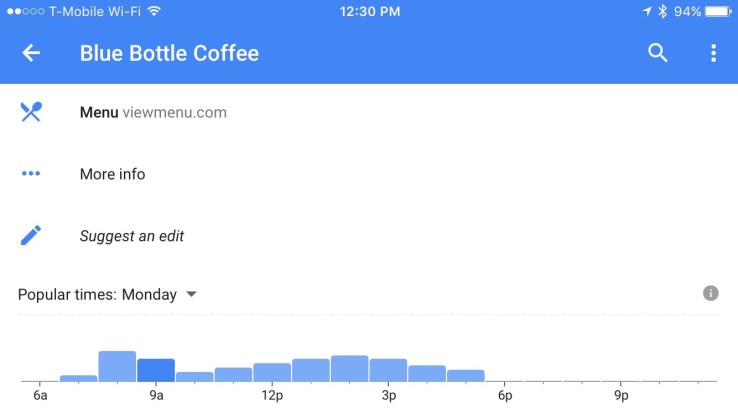
Just in time for your last-minute holiday shopping plans, Google has rolled out an updated version of its Google Maps iOS application, which will now show you when stores are the busiest. Armed with this information, you can better plan when to visit the location in question in order to avoid the crowds. The feature is available not only for retail stores, but for any business where customers are generally curious about the store’s “rush hours.” That means it extends to places like coffee shops, restaurants, grocery stores, gyms and other points of interest.
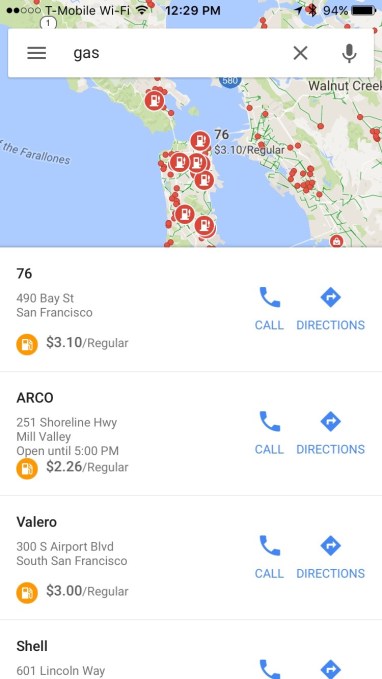
Additionally, the app is now showing gas prices when you search for nearby gas stations.
Google first began tracking businesses’ “popular” times in July, when it introduced the featurewithin Google Search. At that time, if you searched for a business on Google, it would offer a chart indicating when the store or other establishment became more crowded, using the anonymized data it gathers from users of the Google Maps application. The feature wasexpanded to the Android version of Google Maps this September, but had not yet arrived on iOS until now.
Meanwhile, the gas-price tracking is another new addition that was also available on Android first. This October, Google announced a new feature that would allow Maps users to add a stop along a route – like, say, a gas station or coffee shop – which the app would then direct you to before your final destination.
When this feature arrived, it also included support for seeing gas prices when you chose to include a gas station as your additional stop.
IMG_1898
While arguably a minor feature update – Google didn’t even bother putting out an official announcement about the iOS changes – it’s the sort of thing that helps Google Maps better compete with its rival Apple Maps on iOS devices, where it doesn’t have the benefit of being as deeply integrated into the mobile operating system.
Today, it’s not enough for mapping applications to offer just maps and directions. Extra information like prices, photos, hours, busy times and more can help push mobile consumers to use one application over another.
To help it gather more data about businesses, Google also expanded its “Local Guides” program this November, allowing any Maps user to help correct business listing errors or offer up additional business details by answering a series of questions that appear as pop-ups in the app, like “is it quiet here?” or “is the place family-friendly?”

This program also now includes questions that ask about how busy a store is – basically, another window on top of the anonymized data Google is already collecting.
The updated version of the Google Maps app is live now on the iTunes App Store. 

Google will stop you recording straight to YouTube from your webcam next month


Google has announced that it will be shuttering YouTube’s Webcam recording feature on January 16.
The option to record from your computer straight to the video sharing site came about in 2006 when Google acquired YouTube but according to the company, it never took off and is rarely used.
Google also says the fact that it runs on Flash, which is no longer supported, is another reason for its removal.
One of the draws to this feature is the fact it requires no upload time after recording a video. The only options remaining if you don’t have an external camera after January 16 will be to use other software, like Photo Booth on a Mac or Camera on Windows to record a video with a webcam and upload it to YouTube after.

Friday, December 11, 2015

And Poof! Google Previews Its Own Content Delivery Network


And partners like Akamai should be worried.

Well this is interesting. Just weeks after inking a deal with Akamai, the leader in content delivery network (CDN) services, Google is now previewing an early version of its own Cloud CDN service, according to the company’s website.

This service appears to build on the company’s existing content network—the purpose of which is to put all sorts of data types, big video files etc., as close as possible to users to speed up response time. All of those locally cached files means less delay between you clicking, for example, on that YouTube link and actually seeing the video play. Google already has partnerships with Akamai  AKAM 0.81% , as well as with other CDN providers like Cloudflare, Fastly, Level 3 Communications and Highwinds.

The difference here is that Google is automating the service and making it more broadly available to third-party customers.

Here’s how Google  GOOG -0.29%  describes its latest entry, which was first spotted by VentureBeat:

Google Cloud CDN uses Google’s globally distributed edge caches to cache HTTP(S) Load Balanced content close to your users. Caching content at the edges of Google’s network provides faster delivery of content to your users while reducing the load on your servers.
On Wednesday, Fortune reported that Google, which is building its Google Cloud Platform business, may use those existing network end points to put more computing power, sort of mini-data centers, in more locations worldwide. That would help it catch up to Amazon Web Services  AMZN -0.37%  and Microsoft Azure  MSFT 0.53% , both of which currently host more cloud data center facilities globally than Google.

What is new in the latest Google post is not the CDN itself, but the linkage between the CDN’s edge caching stations and the load balancer which, as its name implies, divvies up traffic among the various caching stations. Also new is that any type of content, not just object files, can make use of this service.

This could be a first step toward using Google’s caching end points as cloud service extenders, as reported. Or perhaps not. Fortune reached out to Google for comment and will update this story as needed.

For more from Barb, follow her on Twitter at @gigabarb, read her coverage at fortune.com/barb-darrow or subscribe via this RSS feed.

Make sure to subscribe to Data Sheet, Fortune’s daily newsletter on the business of technology.

Visit our website:  www.pixotritechnologies.com  , http://pixotrigames.com/

Saturday, May 30, 2015

Virtually there: How Google is readying VR for you

Google has an ambitious plan for the future: help nearly anyone with a smartphone to experience virtual reality.


The technology industry is preparing for an onslaught of new devices that mount on your head, immersing you in computer-generated worlds ranging from space battles to Spanish villas.

The trend is called virtual reality, or VR, and the technology is moving from science fiction to store shelves within the next year. Once thought of as a gimmick from the early '90s, VR is now one of the hottest markets in the tech industry as low-cost components and powerful software have made replicating the real world easier and more lifelike.

As it happens, some of the biggest companies in the world are staking out a position offering the highest-quality devices, capable of displaying complex imagery and inserting users in a digitally created world that feels like our own.

Google? It wants to help everyone else.

The search giant will do this with a product called Cardboard, a simple device made from Velcro, a button, some lenses and folded cardboard. The project was first announced at the company's I/O developer conference last year, but Google returned to this year's show with an updated version that works with devices whose screens measure up to six inches diagonally. Google also showed off a new version of its Cardboard smartphone app. Perhaps the biggest change: Cardboard and its apps will work with the iPhone, in addition to Android devices.

The takeaway: Cardboard may sound cheap, but it's a powerful play for getting VR out to everyone and their mother.

VR for the masses

All told, the device costs less than $20, a fraction of the $350 or more that most high-end headsets are expected to command. The trick: Your smartphone is both the engine and the display, sliding easily into the front of the contraption and viewable through a pair of off-the-shelf lenses.


For Google, this is business as usual. The search company has made its name by offering technology and software broadly and at little or no cost, inspiring millions of people to flock to its products. It's how the company helped make its Android software for mobile phones the most popular in the world.

 And for the broader industry, Google's Cardboard could be the device that introduces VR to people from rural India to downtown San Francisco, all while companies like Facebook-owned Oculus, Sony, and others design expensive headsets requiring powerful hardware to generate 3D images.

"In many ways what's going on in VR is similar to what happened in mobile seven years ago," said Andrey Doronichev, product manager for VR apps at Google, referring to the earliest days of Android. Google hopes Cardboard will do what low-cost Android smartphones did back then: quickly make technology available to billions of people.

With Cardboard, Google can "introduce an incredible amount of people to VR in a relatively inexpensive way," he said.

Yet critics of Cardboard say it could undermine the industry's attempts to attract the broader public. Since the last major attempts to sell VR almost two decades ago, enthusiasts have warned against overhyping the technology and selling it before it's ready.

The fear is that if VR isn't a great experience the first time someone tries it out, it may poison public perception.

Doronichev thinks that while the experience is an obvious downgrade from wearing an expensive VR headset powered by a PC or game console, the overall impression is comparable.

Mobile app development

Mobile’s strategy is the key to any business success in todays digital world. Pixotri technologies works one-on-one with businesses and individual product lines to develop a comprehensive mobile presence that complements your existing brand identity while building out your mobile brand.

 Contact us for your mobile app development requirements.email- info@pixotritechnologies.com. Visit our website: www.pixotritechnologies.com

Thursday, May 7, 2015

Does the Page Match the Search?

Google doesn’t always get it right. But most search professionals already know that. Most of us have witnessed numerous instances of questionable ranking results, the implausible success of dubious competitor tactics, and at some point asked ourselves question "Why on Earth would Google rank THAT page for THAT phrase?"

There are plenty of reasons that one page may show up in the SERPs over another, and not all of those considerations may be within our control. But there are several opportunities to enhance the likelihood of the "right" page showing up for the "right" search.

Muddled Relevance Signals

One of the most obvious factors that determines which page a search engine might select for any given ranking is based on the words on the page. But, sometimes we may find that the page ranking for a phrase is not the page we’ve optimized for that keyword. It’s not the norm, but, it happens.

Page ranking confusion usually signifies a couple of wires crossed somewhere. The global strength of one page with a minor instance of on-page relevance can outrank another page targeted toward that phrase. The relevance signals being considered obviously go well beyond just what words we use and where we place them. The back links, navigation, and internal links can all factor into the equation. A page with external back links relevant to a phrase may outrank a more-well optimized page with no incoming links.


Sometimes on-site signals can be contributing to the confusion. Things like internal link anchor text, image alt-texts, or previous 301 redirects could impact which page shows up first for a keyword query. If you find yourself facing a scenario where that page that is ranking, isn’t the one you’d like it to be, let the nitpicking begin. You may find the issue, like the devil, is in the details.

Unbalanced Hierarchy and Internal Linking

A big piece of the ranking puzzle that is often neglected relates to where a page lives on a site. The depth of a page in the architecture or its distance from the homepage can be a quiet indicator of importance.

If you look at a website hierarchy like a company’s organizational chart, your home page is the CEO and the pages it links to directly could be considered senior executives. Beneath that you have your directors, then your associates and so on all the way down to the interns who take lunch orders. So the real question is, do you have a VP-level page sitting in a junior office?

When a page that has been explicitly targeted for a crucial group of phrases is sitting three or four clicks from the homepage or is located in a sub-directory of another buried folder, you may have inadvertently marginalized the most effective page.

The way a page can be reached from other sub-pages throughout the site via internal links can also help dictate Google’s perception of its value. An obscure, poorly interlinked, highly relevant page can be overlooked in the SERPs for a more powerful, more connected, yet less directly relevant page for a keyword.

How a page performs in search may be a result of how it is treated within the organization of a site. When the page which is the best fit for a search is not treated properly in the hierarchy, a less appropriate page can rank.

If you’ve gone to the trouble to shape and optimize a page for a particular user intent, give that page the support it needs to thrive. Because the page that Google picks, based on its perceived strength and value, may not be right for the user.

A Frustrating User Experience

It’s not difficult to connect user experience to SEO. Things like bounce rate and time on site may be indicators of goal attainment. The presentation of information on a landing page will either satisfy intent, draw a user further into the site, or send them away altogether, back to the SERPs to pursue another avenue. The last option is by far the least desirable.

There is an increased risk of that outcome if you make users work when they arrive on the site. Forcing users to refine their searches, or find the right links to click rather than taking them directly from the SERPs to their ultimate destination, is a less-than-ideal situation. Especially when a more appropriate page does exist. When there is no better page, then there may be more work to be done.

Making Sure There Is a "Right" Page

It’s probably impractical, at least in the short term, to set about creating a unique landing page for every possible filter parameter that you want to offer users. Balance the value of search volume with the quality of information you can provide to guide your priorities. You can also examine previous conversion patterns to help determine if a new landing page for a distinct set of keywords is warranted.

The nuances of volume, content value, and experience are those that will separate a high-quality landing page from a shallow doorway page. Make sure that any keyword-based page you create provides something unique and exclusive to merit its existence and to distinguish it from other pages on the site. Offer some manner of organization and information that makes it the strongest contender for a search phrase rather than a diluted version of another page, simply painted a different color keyword.

Once it’s created, align that content to the most likely desire of the searcher and give it the commensurate prominence on the site. Even if it doesn’t necessarily have a place in the main nav, consider its insertion in a secondary nav or using distinct internal links.

If They’re Lost, Draw Them a Map

The circumstances where a search engine is returning the "wrong" page for a search may be a common occurrence for a site or a unique phenomenon. In either case, the decision on whether or not to "correct" the misunderstanding should be based on the impact to both users and conversions. If there is another page that is a more direct route to the desired information, it may be possible and advantageous to clear away any obstacles to that destination. If a better page doesn’t exist, it might be time to create one. You may not need to leap into action the first time it happens, Google could just be trying to sort some things out. But if it’s a consistent condition, there may be some major sign posts you can adjust to help the engines, and help you, get the best page in front of users right from the start.

SEO solution

We employ a variety of proven recommended techniques to increase your chance for top rankings.These include optimizing your website's page,content,and structure to drive traffic to your site for specific keyword research.Pixotri technology is a  creative house developing quality web designs, E-Commerce solution. SEO services and Gaming development .


Contact us for your SEOrequirement.email-info@pixotritechnologies.com. Visit our website:        www.pixotritechnologies.com

Tuesday, May 5, 2015

How to use Google's Password Alert tool to thwart phishing attacks

Google's built a new tool in the fight against phishing. The free Password Alert Chrome extension keeps track of where you enter your Google account password and alerts you when you've entered it someplace other than accounts.google.com.


This does two things: it prevents you from re-using your Google password on other sites, and it protects you if you've entered your password on a site that's pretending to be Google to collect your private information, a practice also known as phishing.

For a quick primer, phishing is when a group or individual poses as a legitimate company or organization to obtain your sensitive information, such as passwords, social security numbers or credit card numbers. In a phishing attack, you might get an email from someone pretending to be Google asking you to type in your account details on a malicious website.

If you were to enter your Google password on that website, Password Alert will show a message letting you know that "Your Gmail password was just exposed to a non-Gmail page" and that you should change your password immediately. This message appears as soon as you finish typing the final character in your password, and it works whether you're signing up for a new account or simply trying to log in into a non-Google website.

Password Alert is very easy to set up and use. Here's how to get started:

Install the Password Alert extension from the Chrome Web Store.
The extension will prompt you to enter your username and password for your Google account, even if you're already logged in.
After you enter that information, Password Alert will start monitoring where you enter your Google password.
When Password Alert is enabled, you'll see an alert whenever you enter your Google or Gmail password anywhere outside of Google. You can choose to ignore it, if you know you've entered your password on a safe website (like Amazon or Facebook), or click the link to reset your password.

WEB DESIGN

We are a professional web design company with an experienced  team of creative professionals.  We create outstanding designs for  Websites. Our team is adept at implementing the latest web standards and programming techniques.Pixotri technology is a  creative house developing quality web designs, E-Commerce solution. SEO services and Gaming development .
Contact us for your web design requirements email- info@pixotritechnologies.com Visit our website: www.pixotritechnologies.com

Monday, April 27, 2015

Google wants to buy your patents, launches experimental website

New Delhi: Google announced Monday it is setting up an online marketplace for those who want to sell patents to the Internet giant.

"We invite you to sell us your patents," Google patent deputy counsel Allen Lo said in a blog post.
Lo said the "Patent Purchase Promotion" is an "experimental marketplace for patents that's simple, easy to use, and fast."


He noted that patent owners who want to sell often face difficulties.
"The usual patent marketplace can sometimes be challenging, especially for smaller participants who sometimes end up working with patent trolls," he said.

"Then bad things happen, like lawsuits, lots of wasted effort, and generally bad karma. Rarely does this provide any meaningful benefit to the original patent owner."

The new marketplace aims "to remove friction from the patent market" and will include a "streamlined portal" from May 8 through May 22 where patent holders can tell Google about patents they're willing to sell at a price they set.

"As soon as the portal closes, we'll review all the submissions, and let the submitters know whether we're interested in buying their patents by June 26."
The deals should be completed by late August, Google said. Google is limiting the project to US patents and holders with a US tax identification number.

Search  Engine  Optimization  (SEO)

We employ a variety of proven recommended techniques to increase your chance for top rankings.These include optimizing your website's page,content,and structure to drive traffic to your site for specific keyword research.Pixotri technology is a  creative house developing quality web designs, E-Commerce solution.

 SEO services and Gaming development Contact us for your SEOrequirement.email- info@pixotritechnologies.com. Visit our website:  www.pixotritechnologies.com