In this Nov. 12, 2015, file photo, a man walks past a building on the Google campus in Mountain View, Calif. Google is previewing the next version of its Android operating system two months ahead of schedule in an effort to get the upgraded software on more mobile devices.
SAN FRANCISCO — Google is previewing the next version of its Android operating system two months ahead of schedule in an effort to get the upgraded software on more mobile devices.
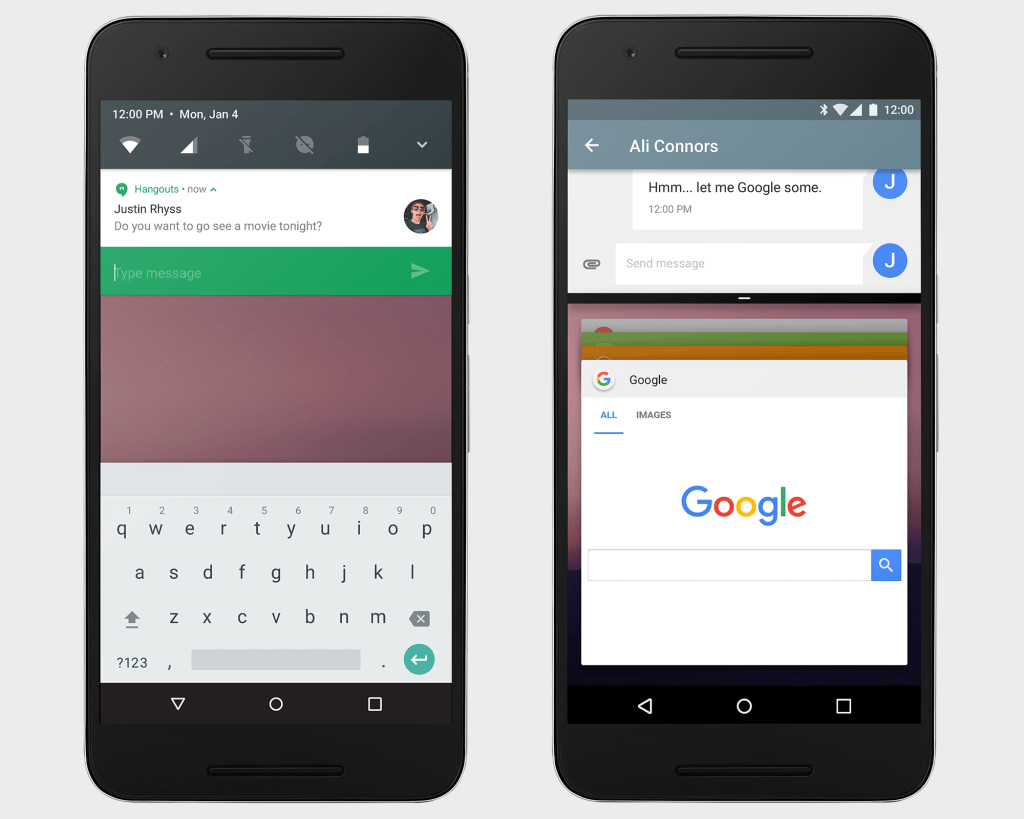
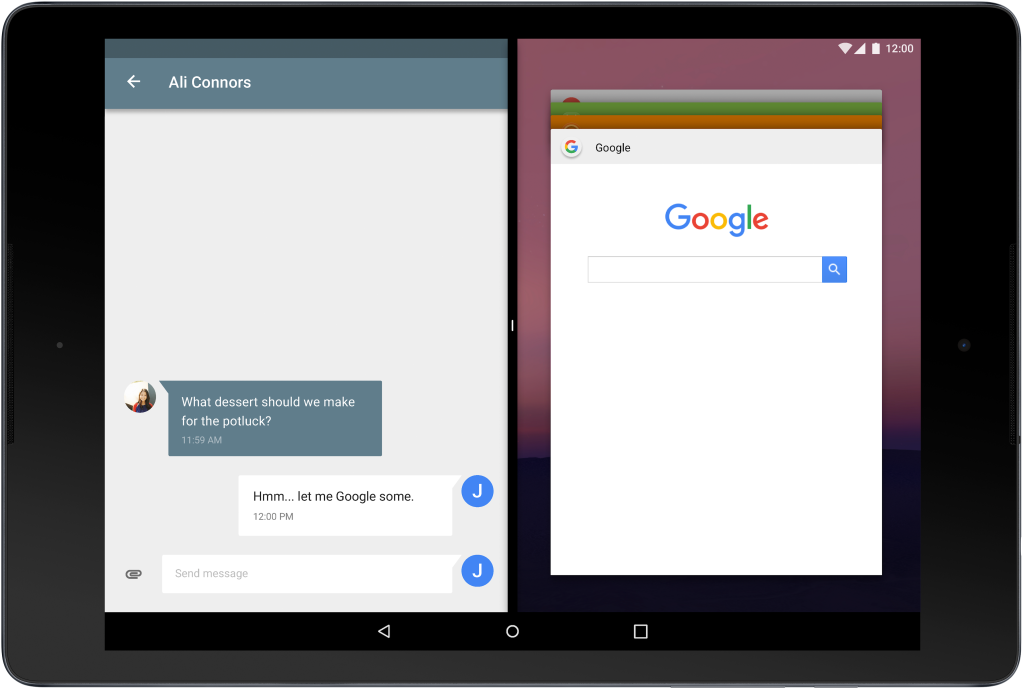
The upgraded software, known as “Android N” for now, offers a split-screen feature so users can toggle between apps more easily. Android N also enables users to reply directly to notifications, something already available on the software that Google makes for smartwatches running on Android Wear.
Another change is being made to reduce the battery power drawn by apps when the device’s screen turns off. Devices running on Android “Marshmallow,” a version released last year, shift into a battery-saving mode called “Doze” only when they’re stationary.
The new edition initially is being recommended only for mobile app makers and will only work on a few smartphones and tablets.
Google typically hasn’t released test versions of Android until its annual developers’ conference, which begins May 18 this year. The head start is designed to get Android N the hands of mobile device makers earlier than ever, according to a Google blog post , to give them more time to set up the new software on their latest models.
By the time phones running on the software hit the market this fall, Android N is expected to eventually be named after a sweet food beginning with “n” in the tradition of all the previous versions that Google has made.
Although other improvements could be added before the software is released to consumers later this year, Android N doesn’t appear to breaking any new ground. Both the split-screen and reply-to-notifications features, for instance, are already offered in the operating system running Apple Inc.’s iPhone.
The absence of a “gee-whiz” factor underscores the challenges facing the smartphone industry as its market matures and it becomes more difficult to come up with new ideas nearly a decade after Apple revolutionized mobile computing with the iPhone’s debut.
The decline in innovation extends beyond the mobile software to the devices themselves, reducing the incentive for consumers to buy new smartphones. That’s one of the reasons that Apple is bracing for its first-ever quarterly decrease in iPhones sales during the opening three months of this year.
Google doesn’t make smartphones, choosing instead to give away Android to device makers. The software is designed to highlight Google’s search engine, maps and other features, giving the company more opportunities to sell the digital ads that generate most of its revenue.
The strategy has established Android as the world’s most widely used mobile operating system, but it also has limited the amount of control that Google has over how the software is used.
That has turned Android into a fragmented system that has become a source of frustration Google. Among other things, about 56 percent of Android devices are still running on versions of the software that were released in 2013 and 2014, according to Google’s tabulations. Only 2 percent of Android phones are on Marshmallow, last year’s model.
In contrast, about 79 percent of iPhones are already running on iOS 9, the operating system that Apple released six months ago. Unlike Google, Apple exerts sole control over the software on its mobile devices.
GOogle unexpectedly announced theAndroid N Developer Previewtoday. And to make things even easier for developers — and adventurous users — the preview is available as an over-the-air update.
The expectation was that Google wouldn’t start talking about Android N until itsI/O developer conference in May. Instead, it decided on a very different approach.
Hiroshi Lockheimer, Google’s SVP for Android, Chrome OS and Chromecast, writes on Medium today (yep, Medium and not Blogspot) that the team decided it wanted to release the preview earlier in order to get more feedback from developers earlier in the process and get the final N release into the hands of device manufacturers this summer. Google’scurrent plan calls for five preview releases and a final release in Q3 2016.
“As we look to the next release of Android, N, you’ll notice a few big changes aimed at you as developers: it’s earlier than ever, it’s easier to try and we’re expanding the ways for you to give us feedback. We hope these changes will ensure that you are heard and reflected — that’s what makesAndroid stronger,” Lockheimer writes. He also notes that this early release will help developers add support for the new features in Android N.
Google stresses that this release is very much a work in progress. Google will probably add a few more features over time, but for now, it is talking about just a few of the highlights of this new release (and chances are we’ll find a few more after we install the preview).
Among the changes in Android N are improved notifications. Using “direct reply notifications,” for example, means developers can now allow their users to reply to incoming notifications right from the notifications shade. Developers can now also bundle notifications from the same app together.
For the first time, Android will also offer a split-screen view. Apps that support this will be able to run side-by-side with other apps on both tablets and phones (and developers can set the minimum allowable dimensions for their apps). Multi-windows support is something users have long asked for — especially on tablets. Google’s own Pixel-C, for example, would make a far better productivity device with this feature.
Besides a basic side-by-side mode, Android N will also offer a picture-in-picture mode so video apps can play in the corner on Android TV devices, for example.
With Android Marshmallow, which is currently only running on 2.3 percent of Android devices, Google introduced its Doze feature, which puts a device into a deep power-savings mode when it’s stationary for a while.
In Android N, Google is pushing this concept a bit further by allowing Doze to also save more battery power when the screen is turned off. In addition, Google says it continues to work on making Android less memory-hungry and making apps that run in the background work more efficiently.
One other new aspect of Android N that developers can look forward to is improved Java 8 language support. Thanks to this, developers can now use the Android Jack compiler to use features like lambdas, which reduce the amount of boilerplate code they have to write.
This is available for all versions of Android from Gingerbread up, but Android N developers will also be able to use default and static methods, streams and functional interfaces.
So how can you get your hands on Android N today? If you don’t mind things not working or randomly breaking, Google will let you sign up for an over-the-air (OTA) update (though as a Google spokesperson told us, that link won’t go live until later this afternoon). That is, of course, if you own a Nexus device.
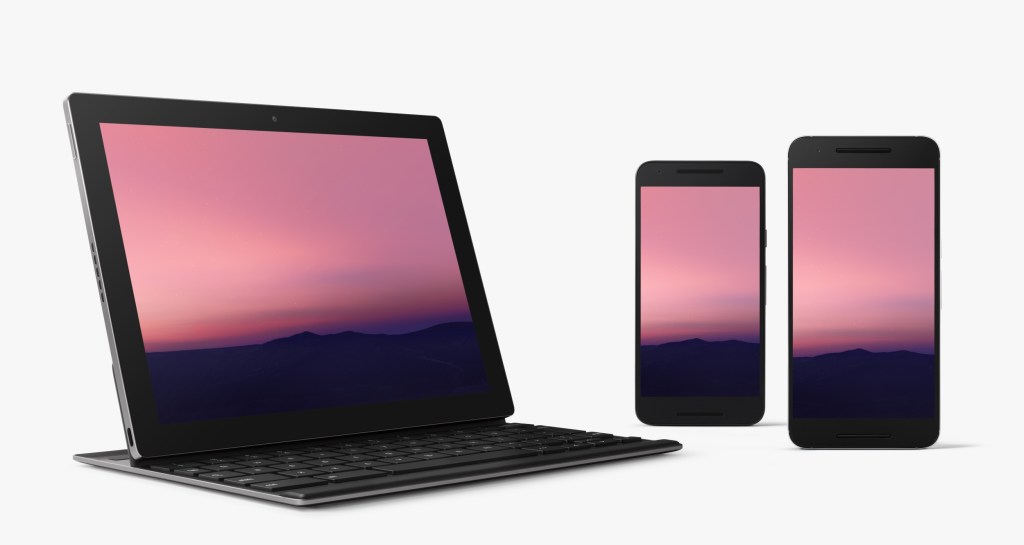
The update is available for Google’s Nexus 6, Nexus 5X, Nexus 6P, Nexus Player, Nexus 9 and Pixel C devices. The one missing device here is the older Nexus 5. Once you’ve updated your device, Google will also continue to push new updates to it as they are released.
In addition to the OTA updates, Google will also continue to make system images for all of the supported devices and the Android emulator available.
Given that Marshmallow isn’t even on 3 percent of devices yet, it’s a bit of a surprise that Google seems to be in a bit of a rush to get Android N out. Chances are, though, that there are still a few more user-facing changes in this preview of Android N, as well, and that the next couple of releases will bring new features, too. For now, however, Google is putting the emphasis on just a few new features for developers.
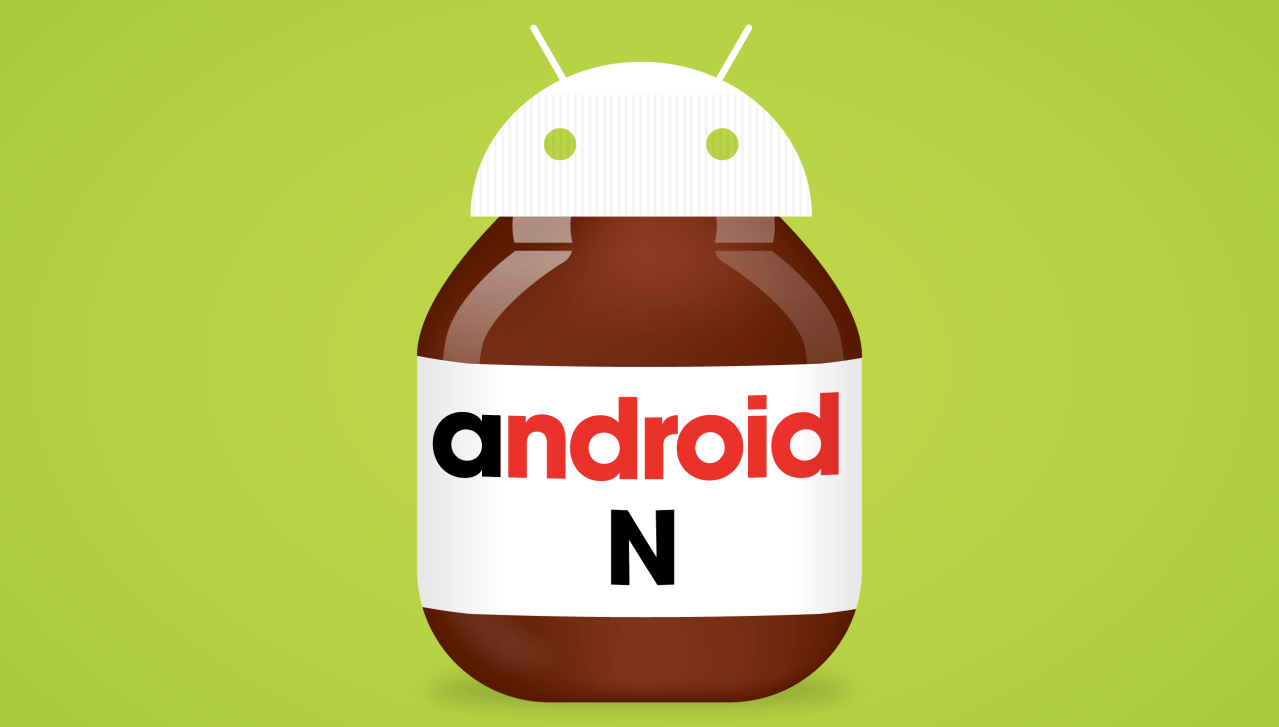
The one thing the company definitely isn’t revealing yet, though, is what dessert/candy that the ‘N’ will stand for once it releases the final version. I’m going with ‘Nutella,’ given that Lockheimer’s post says he’s “nut tellin’ you yet.”
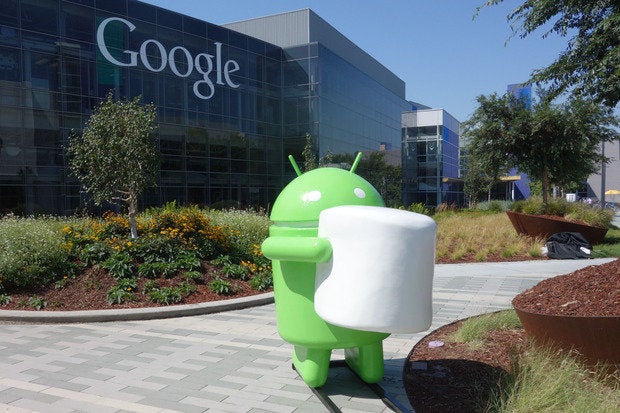
A statue for Google's Android Marshmallow operating system sits on the Google campus in Mountain View on August 17, 2015. Credit: Martyn Williams
More holes have been found in Android's multimedia playback software
Google has released 16 patches for Android, including one for a critical remote execution vulnerability in the operating system's mediaserver.
The company's Nexusdevices will receive an over-the-air update. Google's partners were notified no later than Feb. 1 of the fixes, giving them more than a month to prepare.
The vulnerabilities in mediaserver could be exploited if malicious content is displayed or played on a device, such as an MMS, email, or if the browser plays some type of media, Google's advisorysaid.
A string of vulnerabilities has been found in media playback software since last year, most notably theStagefrightbug.
That flaw could have allowed an attacker to compromise a device just by sending a malicious MMS. A successful compromise required an attacker to know only the victim'sphonenumber.
The severity of Stagefright prompted Google to move to amonthly patching scheduleto address long-running concerns thatAndroidwas not regularly fixed. Mobile devices, particularly those runningAndroid, are a frequenttargetfor cyberattacks.
SamsungandLG, both majorAndroidmanufacturers, also pledged to improve the speed at which security fixes are applied.
The other patches released by Google include five critical ones, eight rated high severity and two considered moderate.
The source code for the fixes will be published on theAndroid Open Source Project repository within two days. UpdatedNexusfirmware images arehere.
Google announced in a blog post Wednesday that it will be expanding its Google Fiber service to San Francisco.
The tech giant said that unlike its usual attempts to build fiber-optic networks from the ground up, it will be using a different tack in San Francisco. According to Google Fiber Director of Business Operations Michael Slinger, the company will make use of existing fiber to “bring service to some apartments, condos, and affordable housing
apartments, condos, and affordable housing properties.”
Prior to this announcement, and a similar one promising Fiber support in Huntsville, Alabama, Google had tested the use of existing fiber in suburban Atlanta, bringing gigabit Internet service to apartment buildings. The Huntsville move, on the other hand, will see Google teaming up with a city-owned network, instead of financing the entire network.
“We have a lot of work to do before we can offer details on service and timing, or identify the specific condos, apartments, and affordable housing properties that will be connected,” Slinger continued in the Google blog post. “San Francisco offers tremendous potential for gigabit Internet, and we hope Google Fiber will provide more fuel for this city’s pioneering residents and entrepreneurs.”
Consumers, particularly home residents and property owners, can currently sign up on Google’s official Fiber page for updates on availability.
Hiroshi Lockheimer, the chief of Google's mobile software, must both fend off Apple and fight Android "fragmentation." His modus operandi: Lighten up, everyone.
Walking through Google's campus on a warm February afternoon, Hiroshi Lockheimer pauses and points to two tourists smiling at their outstretched selfie stick. The world-famous Googleplex is always filled with tourists, who come to gawk and admire the sprawling headquarters in the heart of Silicon Valley.
"Ten years ago, I would have never imagined that," he says laughing, as we pass by.
But it's actually kind of his fault that they're even there. Lockheimer is a big part of the reason smartphones are everywhere. For the past decade, he's helped craft Google'sAndroid operating system, now the most popular mobile software on the planet. Five months ago, he became chief of Android, overseeing development and partnerships and strategizing on how to stay ahead of Apple's iOS software for the iPhone and iPad.
When Lockheimer joined Google in 2006, most of the world was still using feature phones that had little or no access to the Internet. The iPhone, unveiled a year later by Apple co-founder Steve Jobs, definitely helped popularize the idea of smartphones. And even though Apple sold millions of iPhones in the first year, it wasn't until Android debuted in 2008 that smartphones really went mainstream.
Instead of tying its software to one flagship device (and one carrier, at first) like Apple, Google gave away its software for free. Handset makers including Samsung, HTC, Sony and LG lined up and began offering Android-powered phones that ranged, in price and functionality, from high to low. Suddenly, smartphones were affordable to wider swaths of the population.
The giveaway had a catch: Handset and tablet makers who wanted to use Android had to highlight Google services like search and maps on their phones, instead of their own apps.
Google's strategy has paid off. Now more than 2 billion people worldwide have smartphones, according to research firm eMarketer, and four out of five of them are powered by Android. That's over 1.6 billion people with the Internet, high-resolution cameras and, most importantly, Google's apps and services, in their pockets all day long.
That brings our conversation to selfie sticks, which are a direct result of all those pocket cameras. While phones cameras have gotten better, evolution has failed to make our arms long enough to neatly capture the Eiffel Tower, Mount Rushmore or a neon green Android statue in the frame without some extra help.
"Like, really? A stick that has an integrated..." Lockheimer says, launching into a discussion about the technical peculiarities of the low-tech wand before giving up trying to explain. (The selfie stick, by the way, may have been invented in the 1980s by another guy named Hiroshi.)
Lockheimer, 40, may not be a household name, but he's become one of the most important executives in technology today. Google put him in charge of Android in October. That was after co-founder Larry Page announced a radical restructuring that made Google a subsidiary of a newly created parent company called Alphabet. As part of the change, Page became CEO of Alphabet and Sundar Pichai, a trusted lieutenant to Page who was running Android and most of the company's other products, became CEO of Google. Soon after, Pichai promoted Lockheimer to senior vice president of Android. Lockheimer also oversees Chrome OS software for laptops and Chromecast, Google's devices for video and audio streaming.
According to colleagues and former Google employees, Lockheimer's approach to Android and its partners is breezy and lighthearted. It's all about trying to lessen the tension that comes with running the most intense and complicated web of designers, engineers, outside developers and hardware partners in technology -- with each side angling for its own best interest. It's also about figuring out how to get more Android users and hardware makers to adopt the latest version of the software.
The Android team circa December 2008. When they started, the team only had about 20 members, says Lockheimer.Courtesy Andy Rubin
Take it from Hugo Barra, who was Android's vice president of product until he left Google in 2013 to become vice president of global for Xiaomi, a Chinese phone maker with handsets that run Android. Now when he meets with Lockheimer, he's on the other side of the table.
"He's the exact opposite of every other technology leader out there," says Barra, referring to Lockheimer's low-key persona. "Sometimes you have to remind yourself that he's the key executive at Google these days."
The 1 percent
Android is key to Google's future success. It's fundamental to the company's virtual reality efforts and to Google's juggernaut search service, which needs to evolve as people spend less time on desktop computers and more time on their phones.
Over the last several years, Google has polished Android by adding blockbuster features, including last year's Now On Tap, a service that anticipates what you might need based on your location or the time of day.
The rub: The vast majority of Android users can't use many of the software's newest features. That's because only 1.2 percent are using the latest version, Android 6.0, also known as Marshmallow. The majority of users, about 35 percent, use Android 4.4, called KitKat, which is about two-and-a-half years old. (Google always names its Android updates after sweets, but KitKat got its name because Lockheimer loves the chocolate bar, says Android co-founder Andy Rubin. "We proceeded to fill Hiroshi's office with a few thousand of them on launch day," he recalls.)
By comparison, iOS 9, released in September, is on 77 percent of Apple's gadgets. Apple frequently cites what it calls Android's "fragmentation" problem as the reason mobile app developers and customers should focus on the iPhone and iPad.
The slow uptake of Android updates "has been frustrating, to be honest," says Lockheimer, who has a boyish appearance, except for a streak of gray along the front of his otherwise jet-black hair. We're sitting in a conference room with walls splashed orange in Building 43, the main hub of Google's sprawling Mountain View, California, headquarters, about a 35-minute drive south of San Francisco.
The updates get stalled because they typically come courtesy of hardware makers and wireless carriers. Google provides the software, but partners like Samsung often add their own flourishes. Then wireless carriers test the software and are in charge of pushing out the upgrades to phone users.
"People don't update to the latest and greatest, so we as developers can't use the latest features," says Aakash Sareen, co-founder of CopperMobile, which makes enterprise software. That's why CopperMobile only takes advantage of features offered in 2011's Android 4.0, or Ice Cream Sandwich, or earlier.
Lockheimer understands the problem, which is why Google is putting more effort into its Nexus program -- the closest the company comes to making its own branded phone. Those phones use a version of Android's that not altered; it is the way Google intended the software to look and feel. Google works with a different phone maker each year to build the next Nexus and has a major hand in the design process. Last year, Lockheimer and his team worked with LG and China-based Huawei to build the Nexus 5X and 6P, which run Marshmallow.
There have been reports Google is trying to tighten its grip on the Nexus program, giving partners even less say in the design process. Lockheimer won't comment on that but does suggest that Google is ruling out making its own phones, top to bottom, like Apple does with the iPhone. (Google bought Motorola's phone business and decided to sell it to Lenovo two years later, after all.)
Google, says Lockheimer, decides to make only hardware that people can't really find elsewhere, like its Chromecast video-streaming device, which was pretty novel when it came out in 2013. By contrast, the market has phones covered, he says. "Phones are good."
Tokyo to the 'Plex
Lockheimer came to the US in 1993, when he was 18, and immediately missed home. Of mixed Japanese and German descent, he grew up in Tokyo and left to attend Rice University in Houston.
Texas was nothing like Tokyo and he wasn't happy. He went there to study architecture (buildings, not software), but didn't end up attending classes. Instead, he spent most of his time in the computer lab where he became enamored with a Unix workstation, which he'd never seen before. He dropped out of college after a few months and moved back to Japan to learn how to program on a Mac.
Eventually, he moved to California. Rubin had a startup called Danger, which created the Sidekick, the first smartphone that truly embraced the Internet. He hired Lockheimer.
Members of the Android team -- Mike Cleron, Rich Miner, Steve Horowitz, Ethan Beard, Hiroshi Lockheimer and Andy Rubin -- at an airport lounge in July 2006.Courtesy Andy Rubin
Rubin says Lockheimer, a college dropout and self-taught developer, intrigued him.
"It was really a combination of his background and engineering horsepower that led to us recruiting him," Rubin says. "He's smarter than anyone in the room."
In 2003, Rubin left Danger for his follow-up act, a little company called Android. Two years later, Google bought it for around $50 million. Rubin tapped Lockheimer shortly after and signed him on as Android's first hire after its co-founders.
In those early days, Android was a tiny company. The team was made up of about 20 people, who kept things very informal. During a meeting with Peter Chou, HTC's then-CEO, Rubin showed off a remote control helicopter and accidentally crashed it, Lockheimer remembers. And when the team first pitched consumer electronics giant Samsung on Android, they got a "lukewarm reaction," recalls Rubin.
Google won't say how big the Android team is now. A spokeswoman tells me that because their work touches several different parts of the company, it's hard to know exactly how many people are working on the software.
But what they do know is that growth has brought on some headaches. The European Union is investigating Android in an antitrust probe, asking if Google's business practices with its software partners are anti-competitive. Also, Apple sued Samsung over its use of Android and prompted Jobs to warn that he'd go "thermonuclear" on Android to take down what he saw as a copycat of Apple's software.
Lockheimer tells me he had the "pleasure" of testifying in the Samsung legal battle. As for Jobs' explosive threat, he's unwavering.
"I know what I know," Lockheimer says. "We were focused on our own products."
Jokes on jokes
Even though Lockheimer is technically the new Android boss, he's been calling the shots from the ground for a long time and has always handled relationships with most of Android's partners, says Barra.
The biggest boon in officially giving Lockheimer the top job is continuity. After Rubin left the Android team in 2013 to head Google's nascent robotics efforts, Pichai took over Android. (Rubin left Google altogether in 2014.) But day to day, Lockheimer ran the show, consulting with Pichai as needed, says one former Google employee who worked closely with him.
It also helps that Lockheimer is so well liked. When he was promoted to a vice president role in 2011, there was a lot of joy when the memo went around the office, says Barra.
"That email sent massive waves of cheering throughout Google," he recalls. "It was the most celebrated VP promotion I've ever seen."
That temperament helps in situations with short fuses. In 2012, the night before Google was set to debut Android Jelly Bean at its annual I/O conference for developers, the team met at San Francisco's Moscone Center to run through the keynote speech. But it was behind schedule and the team was anxious, recalls Barra.
Lockheimer, ever the diplomat, came in and helped rewrite the script without hurting anyone's feelings.
He plays the same role at meetings with partners, where the stakes are often high. "Those can get pretty intense," says Brian Rakowski, Android's vice president of product management. "He'll make a joke to lighten the mood."
Everyone I talked to for this story said you can't get through a meeting with Lockheimer without hearing at least one joke. I know firsthand they're right.
When I ask about his promotion, he says: "Well I'm actually the CEO. I just haven't told anyone yet."
On naming the next Android update, he quips: "I'm just starting rumors now. Last week I tweetedsomething about national Nutella day."
As for Android, Google has expanded it to power not just phones and tablets, but TVs, smartwatches and car dashboards. When I asked Rubin, the man who started it all, about the biggest challenges ahead for Android, he demurred. But he did say the software is in good hands.
"Wherever Hiroshi takes it," Rubin says, "he'll likely be right."
With February coming to an end, Google’s deadline for the launch of its industry effort to speed up and improve mobile web pages is nearing. According to AdAge, Accelerated Mobile Pages will launch on February 24 with BuzzFeed, the Wall Street Journal, and the Washington Post also launching AMP ready sites.
Specifically, Google will begin displaying AMP sites in search results next week. AMP loads 85% faster than traditional mobile web pages, according to Google. Testing done by Pinterest has shown AMP sites load four times faster and use eight times less data. Publishers hope that AMP will encourage more people to read from the mobile web. Support for paywalls and other subscription sites was added in time for the launch.
While websites will be able to display ads on AMP, those that take over the entire screen are not allowed, nor are ads that force users to watch a video before getting access to the content they actually want to see.
AMP was announced in October of last year with Google saying it will begin displaying AMP sites in Google Search results in late February. A number of messaging apps will begin linking to AMP pages, while Twitter will begin experimenting with AMP pages from publishers sometime at the beginning of this year. Publishers can learn more about enabling AMP on the project’s page.