Showing posts with label microsoft updates. Show all posts

Tuesday, March 8, 2016

Microsoft High On Office 365 Success


Summary

Do you know how popular Office 365 is compared to Google Apps for Work? You'll be surprised!
Microsoft's sales strategy for Office 365 has been aggressive and controversial, but it has been extremely effective.
The ball is now in Google's court. Can they respond with an equally aggressive strategy and astonish us with their numbers over the next few quarters?
When I first read about how Microsoft (NASDAQ:MSFT) was slowly edging out Google (GOOG, GOOGL) Apps from the office suite space, I was a little surprised. To be honest, I didn't really know the numbers, but I had a bias towards Google Apps. I'd been using it for quite a while and everyone I knew used it as well, so in my mind it was the best option in the business.
But the moment I started digging for the facts, I was shocked by how cleverly Microsoft has been going about decimating Google's position in the top three - along with salesforce.com (NYSE:CRM) and Box (NYSE:BOX). I also found several interesting things about both Google Apps as well as Office 365.

A Primer on Office Suite from Google and Microsoft

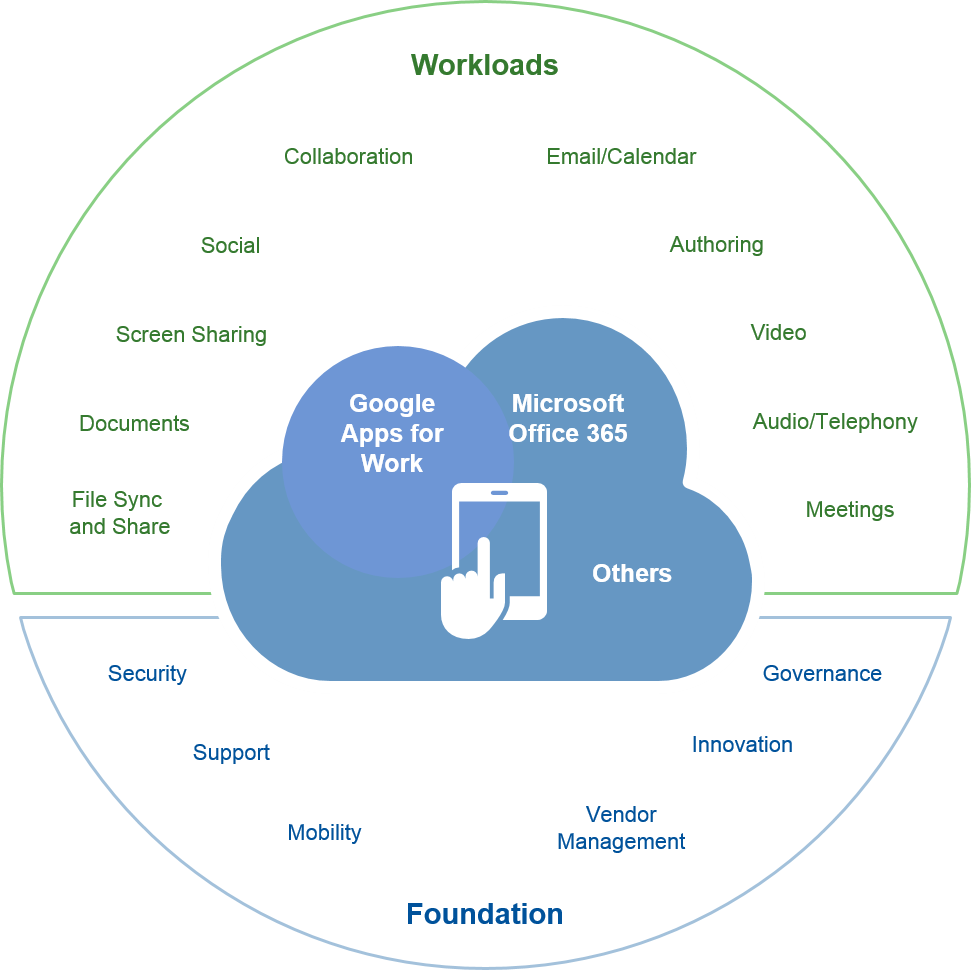
An office suite from a cloud application perspective is a set of tools designed for businesses to operate more efficiently and with a much lower investment in IT infrastructure. It's not an infrastructure service as much as an appealing cloud environment, where company employees can collaborate more effectively, access their files from anywhere without major security concerns and access the tools they need to do their jobs.

Thursday, February 25, 2016

Microsoft’s Xamarin acquisition opens door to truly universal Windows apps


Microsoft’s Xamarin acquisition opens door to truly universal Windows apps

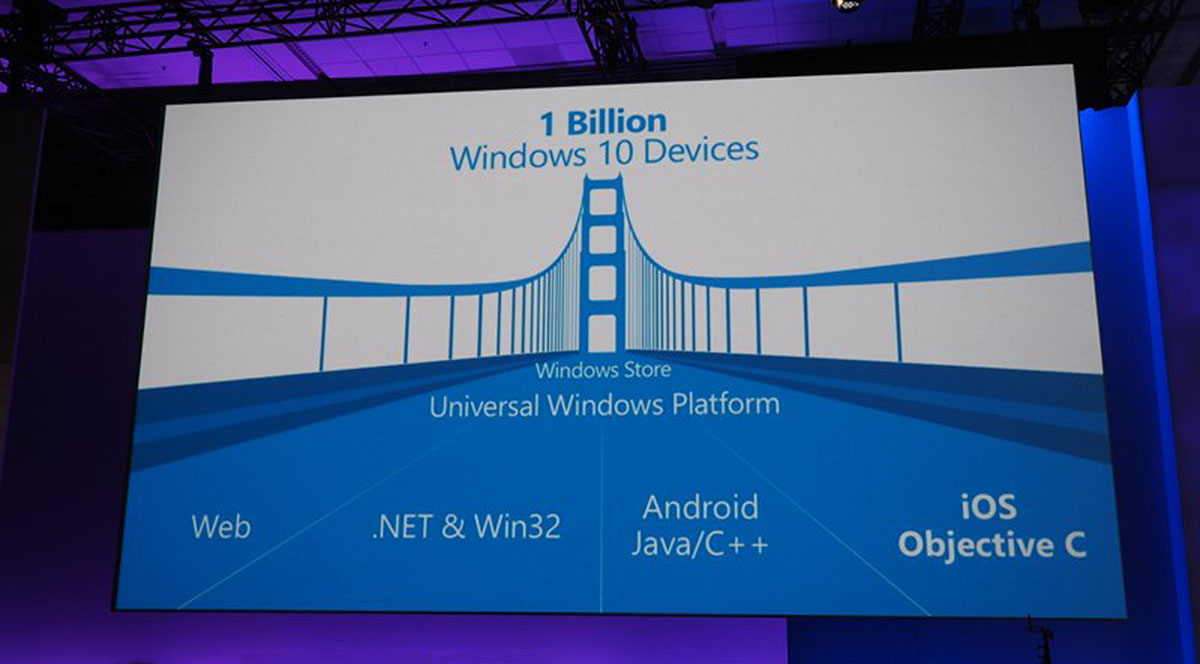
Xamarin’s cross-platform .Net development tooling could extend Windows Universal Platform development to iOS, Android, and beyond


After years of “will they, won’t they” speculation, Microsoft has finally announced it will purchase Xamarin, the company that brought native Android and iOS development into Visual Studio. The acquisition makes perfect sense, but why now? Although the move should have been made a year ago, it’s not too late for Microsoft’s wider development ambitions.

By building on .Net and C#, Xamarin has provided Windows developers with an easy route to building applications outside the Windows ecosystem, without alienating users. Microsoft has struggled to deliver cross-platform development tooling on its own, relying on hybrid HTML5 applications for Android and iOS, making it hard to deliver the user experiences that Android and iOS users demand. Xamarin fills this gap.

Bringing the two organizations together adds cross-platform UI tooling to Microsoft’s developer platform, along with the compilers needed to deliver native code to mobile devices. By incorporating Xamarin into the official .Net toolchain, Microsoft could make Windows 10’s Universal Windows Platform truly universal.

Microsoft’s original Windows 10 bridge strategy was about bringing non-Windows applications to Windows, an approach that left many Windows developers feeling abandoned. Adding Xamarin’s tools to its developer platform gives Microsoft the missing piece in its cross-platform story, helping Windows developers build cross-platform apps that deliver native user experiences on Mac OS X, iOS, and Android, as well as various versions of Windows 10. These apps might even extend to Google’s and Apple’s smartwatch platforms.

Xamarin recently retooled to take advantage of the latest .Net compiler technologies, and it’s currently working on a new version of its development tools. According to CTO Miguel de Icaza, the new tools will include scratchpad features similar to Xcode’s Swift Playgrounds -- replacing much of what was delivered using Mono with Microsoft’s Roslyn. Bringing features like this to Visual Studio should help Microsoft bring non-Windows developers to the Windows platform. It should also speed up the process of delivering Universal Windows Platform apps to other OSes. Developers will need only a single code base, with separate UI modules for each device class they want to target.

Recent Xamarin developments have also included Xamarin Forms, a single set of UI controls that map to native functionality. Using Xamarin Forms, a developer can quickly lay out an application GUI and have it render appropriately on target devices, using iOS features on iPhone and iPad and Android features on Android phones and tablets.
While developer tools are a key component of Xamarin, Microsoft is likely to have found the company’s Test Cloud an attractive part of the deal. Automating cross-device testing, Test Cloud fills another gap in Microsoft’s devops strategy, giving it more of the tools needed for an automated cross-platform build chain. Other devops tooling from Xamarin should help add user acceptance testing and cross-platform application analytics to Microsoft’s tool chest.

Xamarin has gradually shifted its focus from independent developers to enterprise development teams, and it will now be able to leverage Microsoft’s existing enterprise relationships and sales processes. Similarly, Microsoft now can approach enterprises with a complete native cross-platform development model, rather than its previous mix of Universal Windows Platform and Apache Cordova hybrid applications. Through the free Visual Studio Community edition, Microsoft will be able to deliver Xamarin’s development tooling to a wider selection of student, open source, and independent developers than the current MSDN subscription that included Xamarin was able to reach. Integrating Xamarin subscriptions into the new Visual Studio subscriptions shouldn’t be hard, as both have comparable tiers.

Adding cross-platform tools to its development platform makes a lot of sense for Microsoft, opening up the Android and iOS worlds to .Net and helping deliver the endpoints that Satya Nadella’s cloud-first, mobile-first world needs. The acquisition should close before Microsoft’s 2016 Build developer event at the end of March.

Wednesday, February 24, 2016

Microsoft’s new Android keyboard gives you quick access to contacts and files


Microsoft may have just purchased SwiftKey, but today it's releasing a new Android keyboard of its own. It's called the Hub Keyboard, and it provides quick access to your Office files, your local clipboard, your contacts, and a translation tool.
A small bar sits on top of the keyboard, and tapping on its icons lets you grab information from elsewhere on your phone without having to hop into another app. Tapping on the contacts button, for instance, let me search for a friend and then have their name and phone number automatically inserted into my document. The translate button let me type in English and have it automatically transformed into Spanish, or a selection of other languages.
The Hub Keyboard comes from Microsoft's Garage group, which makes experimental apps with the goal of trying out new ideas. There are some interesting ones in this keyboard, like the translation tool, but other aspects of the keyboard may make it a nonstarter for daily use. You can't view autocomplete suggestions while the quick access buttons are up, for instance, and the documents button is only useful for people who store their files with Office 365. On the other hand, Microsoft suggests that new quick access options could come to the Hub Keyboard over time, and you'd be able to turn off the ones that you don't find useful.
Microsoft has been putting more and more apps out on Android over the past year, with it now offering the Office suite, a home screen launcher, and popular email and calendar apps. It doesn't necessarily need a keyboard app now that it's the owner of SwiftKey, which has been a top keyboard alternative for years, but Hub gives it another opportunity to see what features might catch on and how it can better integrate services like Office 365 and translation. Microsoft also released an Android app called Sprightly this week, which is meant to let businesses quickly put together fliers.
While there's no word of an iOS launch for the Hub Keyboard, Microsoft does have an iPhone keyboard in the works, too.

Thursday, December 31, 2015

Microsoft’s new photo app lets you edit your selfies like a professional


Microsoft's new selfie enhancement app for the iPhone.
Above: Microsoft's new selfie enhancement app for the iPhone.
Image Credit: Ken Yeung/VentureBeat


Microsoft has released a new photo app designed to feel better about your selfies. It’s a simple service, really: you snap or choose a photo from your iPhone’s camera roll and then process it right in the app.
Just like the editing features in Instagram, Microsoft Selfie (that’s the name of the app) is geared towards making sure that while you’re obsessed with that selfie picture, you’re going to look your absolute best in it. In fact, Microsoft has described the app as a “selfie and portrait enhancement application” where it’ll utilize an algorithm to make your photo appear like it was done by a professional.
Microsoft Selfie onboarding Microsoft Selfie onboarding
Although it’s called Microsoft Selfie, you can use either the front-facing or the rear camera to take photos, which means that you can utilize the app’s technology to make basically any photo you have that much better.
The app takes into account factors like your age, gender, skin tone, lighting, noise, and more before making simple changes to your photo. Users have 13 different filters they can choose from to do the post-processing work, but only one can be used at any given time. Although if you want to apply more filters, you could save the file, reopen it again in the app, and edit it using another filter. Once you’re done processing an image, the file is stored on your phone.
Microsoft Selfie onboarding Microsoft Selfie onboarding
Microsoft Selfie does not contain any connections to social networks like Instagram, Google Photos, Facebook, or Twitter, so if you’re looking to share a photo, you’ll have to do it the old fashioned way.
On the surface, seeing Microsoft create a selfie “enhancement” app is just bizarre especially when it’s built for the iPhone and not for Windows Phone. Does the world really need another selfie app? However, it’s a good way to showcase the potential of the company’s machine learning, artificial intelligence, and image recognition technology, such as how it is using Project Oxford and its face APIs that debuted in April.
Another possible benefit of using this app is how it’ll could vastly improve the quality of photos taken with the front-facing camera. You probably notice that the pictures taken with the rear-facing lens are often better than the front. When you take selfies, there’s also a bunch of noise (it’s grainy), but now Microsoft’s technology can give you the same look and quality across both lenses on the device.
No word on if this will come to Android phones.

Monday, November 16, 2015

Microsoft delays tool that will bring Android apps to Windows


Microsoft has confirmed that a tool that lets Android apps easily run on Windows 10 is "not ready," according Windows Central and other sources. The software giant introduced the Windows Bridge for Android, dubbed "Project Astoria," earlier this year as part of a larger effort to help app-builders easily convert Web, iOS and Android apps to Windows. Developers complained that it still isn't available (unlike the other apps), though Microsoft hasn't said the project is in trouble. However, the Project Astoria forums have gone dark and Microsoft removed the Android subsystem from the last Windows 10 Mobile preview, suggesting it may be killed altogether.
The Android bridge is essentially just an emulator, and has been beset with technical problems and weak app ports, according to Windows Central. On the other hand, the "Project Islandwood" tool for iOS requires that apps be reworked and recompiled before they can be imported to Windows. With the latter tool, the end result is high-quality apps that take advantage of Windows 10 features -- in fact, it's reportedly being used on the next Facebook app for Windows 10. The fact that many Android developers also build iOS apps may mean Microsoft feels the Android tool is no longer necessary. For the others, Redmond hopes that its Windows 10 universal apps, which run on both desktop and mobile versions, will convince developers to take the plunge on mobile.
Visit our website:  www.pixotritechnologies.com  , http://pixotrigames.com/

Monday, October 26, 2015

Developers Ignored Windows For Android And iOS, Microsoft Forced To Follow

Along with the new Surface Book and the Surface Pro 4, Microsoft’s launch event this month also revealed the latest Lumia smartphones. The Lumia 950 and Lumia 950XL will be the first smartphones designed from the ground up to run Windows 10 in its ‘mobile’ mode. The two handsets will be packed with the latest software from Microsoft alongside the operating system, solid hardware specifications, and will clearly be the flagship devices from Redmond.
Microsoft Lumia 950 (image: Microsoft PR)
That’s not going to be enough to have any meaningful impact on the smartphone market share numbers, a fact that Microsoft surely knows. Redmond’s strategy has moved on from being a major OS provider in the mobile space, and if you want to know what went wrong look no further than the classic call of ‘developers, developers, developers’ and who followed who.
This theme goes back to the introduction of Windows Phone 7 as it took over from Windows Mobile. The important point here is that Microsoft implemented a compatibility break. Established applications on Windows Mobile had to be rewritten for Windows Phone… and coming from a standing start in terms of unit sales there was not a huge addressable market to finance any development efforts.
Less than two years later Microsoft did the same trick again as Windows Phone 8 arrived, and all of the Windows Phone 7 applications had to be re-engineered to run on the new NT-based kernel, as opposed to the CE-based kernel of 7. The Windows Phone platform was once again starting from zero units in the market, offering third-party developers very little opportunity to earn significant income.
In the background of Microsoft’s moves (and remember Nokia is dragged up in all of this, having dropped Symbian OS in favour of Windows Phone) you have the rise of Android and iOS, along with an explosion in third-party applications and opportunities to monetize applications to audiences that were magnitudes larger than Windows Phone could offer. Is it any wonder Windows Phone never picked up any traction from developers?

Thursday, May 14, 2015

Windows 10 to come in Home, Mobile, Pro, Enterprise, Education editions


Microsoft is all set to launch Windows 10 in the next couple of months in around 190 countries in 111 languages, although no fixed date has been announced yet. There will be various editions of Windows 10 according to the use cases. The editions announced include Windows 10 Home, Mobile, Pro, Enterprise, Mobile Enterprise, Education. Let us take a look at each of these editions.


Windows 10 Home edition will be the consumer facing edition which will be seen on most desktop PCs, laptops and 2-in-1s. The Home edition will support voice-assistant Cortana, Windows Edge web browser as well as Windows Hello face recognition, iris scanner and fingerprint login for various Windows apps such as Photos, Maps, Mail, Calendar, Music and Video.

For the business users, you have the Windows 10 Pro edition, which has all the features of the Home edition plus additional features such as device management, security features, cloud features ideal for smaller businesses. For medium and large size organisations there is Windows 10 Enterprise edition which builds up upon the Windows 10 Pro. Apart from providing security features, Windows 10 Enterprise also has a broad range of options for operating system deployment and comprehensive device and app management.

On the mobile front, you get Windows 10 Mobile edition which is the new name for Windows Phone OS and the Windows 10 Mobile Enterprise edition. As the name implies, Windows 10 Mobile is meant for use on mobile phones, tablets and other touch-centric devices. It will support Windows Universal apps which are there on Windows 10 Home edition along with a touch-optimised version of Office. Windows 10 Mobile will also offer Continuum for phone which will let users use multiple devices seamlessly. Windows 10 Mobile Enterprise is the mobile arm of the Windows 10 Enterprise edition. Just like the desktop version, the Windows 10 Mobile Enterprise will also incorporate the latest security and innovation features on the mobile devices.

Windows 10 Education is a new edition which builds upon Windows 10 Enterprise and is designed for use in schools among staff, administrators, teachers and students. “This edition will be available through academic Volume Licensing, and there will be paths for schools and students using Windows 10 Home and Windows 10 Pro devices to upgrade to Windows 10 Education,” mentions the Windows Blog.

“Because we have built Windows 10 to be delivered as a service, this milestone is just the beginning of the new generation of Windows. Starting this fall, customers can expect ongoing innovation and security updates for their Windows 10 devices, including more advanced security and management capabilities for businesses,” said Tony Prophet on the Windows Blog.

Windows 10 Home, Windows 10 Mobile and Windows 10 Pro will be available as a free upgrade, for the first year, for existing genuine users of Windows 7, Windows 8.1 and Windows Phone 8.1 devices. There are no pricing plans announced for use after one year.

SEO solution

We employ a variety of proven recommended techniques to increase your chance for top rankings.These include optimizing your website's page,content,and structure to drive traffic to your site for specific keyword research.Pixotri technology is a  creative house developing quality web designs, E-Commerce solution. SEO services and Gaming development .

Contact us for your SEOrequirement.info@pixotritechnologies.com. Visit our website:        www.pixotritechnologies.com

Tuesday, May 5, 2015

Microsoft introduces Azure DNS in public preview, expanding its cloud capabilities

The big keynote at Microsoft’s enterprise-oriented Ignite conference in Chicago this week happened yesterday, but that isn’t stopping Microsoft from making announcements outside the keynote. Today, Microsoft unveiled new cloud-networking capabilities, including a new service for domain hosting called Azure DNS.


“Azure DNS is a new service to host DNS domains and provides name resolution using Microsoft’s global infrastructure,” Yousef Khalidi, an engineer working on networking for Microsoft’s Azure public cloud, wrote in a blog post today.

“By hosting your domains in Azure, you can manage your DNS records using the same credentials, APIs, tools and billing as your other Azure services. Azure DNS uses anycast networking, so that each DNS query is answered by the closest available DNS server. Azure DNS is also backed by a global footprint of DNS origin servers, providing you robust performance and fast query times.”

The feature is available today in public preview, with a 50 percent discount, Khalidi wrote. The first 25 hosted DNS zones cost 25 cents per zone per month, and the first billion DNS queries cost 20 cents per million.

The rollout comes almost five years after market-leading public cloud Amazon Web Services announced Route 53, its domain name system (DNS) service. Google announced its DNS service, Cloud DNS, in March 2014. Google and Amazon’s services use anycast networking, just like the new Azure service.

The announcement went largely unnoticed today after being announced in a talk, but it did elicit some positive response on Twitter:


Game development 

The employees at Pixotri Game Studio have vast experience in creating games and are always trying to push the boundaries of technology and creativity. The games are created using the most popular game enigine Unity, which provides robust, high performance, platform independent solution to creating games.

Pixotri technology is a  creative house developing quality web designs, E-Commerce solution. SEO services and Gaming development .
Contact us for your mobile gaming requirements email-info@pixotritechnologies.com. Visit our website: www.pixotritechnologies.com

Monday, May 4, 2015

Windows Media Center will not be updated for Windows 10, says Microsoft


Microsoft Windows Media Center was first introduced in 2001 as a separate Windows XP version, but the software giant stopped updating it in 2009. The company is now reportedly planning to kill off the Media Center in Windows 10, which means that PCs which are upgraded from previous Windows version will not have this feature, and there will be no way to get it back.

In conversation with ZDNet at the Build developers’ conference in San Francisco, a Microsoft executive confirmed that there will be no update to the company’s Media Center software for Windows 10. If a user tries to install the most recent build of Windows 10 on a PC running Media Center, they will get a message which states, “Uninstall this app now because it isn’t compatible with Windows 10.”

Windows Media Center’s basic functionality included ‘file media player, broadcast TV recording and playback, DVD playback control, CD playback, photo display, media sharing and controlling the channels for TV watching through an attached TV tuner card’, elaborated Venture Beat. It came pre-installed in Windows XP Media Center Edition, Windows Vista Home Premium and Ultimate editions, and all Windows 7 editions. Later, it was also available on Windows 8 Pro and Windows 8.1 Pro.

Users who do not upgrade their PCs to Windows 10 will still be able to run it on their Windows 7 and Windows 8.1 Pro. The company says these users will get support through 2020 and 2023 respectively.


Digital marketing

Digital marketing helps you to find yourself in first place among the other competitors. We help you to strategically plan and execute your,product and services through our online platforms.Pixotri technology is a  creative house developing quality web designs, E-Commerce solution. SEO services and Gaming development.

Contact us for your Digital marketing requirements.email- info@pixotritechnologies.com. Visit our website: www.pixotritechnologies.com

Thursday, April 30, 2015

This Microsoft website will detect people's age in photos


If you ever wondered if you look your age in photos, or how old that one aunt in your family really is, there’s now a website for that, thanks to none other than…Microsoft?

It’s true. The technology company  MSFT -0.86% recently released a tool for facial recognition, and one of its internal teams decided to have fun by using it to build a website that predicts people’s age in photos. It’s aptly named “how-old.net.”

Sure, it’s fun to guess the ages of your friends and family, but we at Fortune wondered—could Microsoft’s technology detect the ages of the industry titans we feature on the cover of our magazine? Could the tool accurately determine the age of Disney CEO Bob Iger? Pope Francis? Theranos founder Elizabeth Holmes?

You can see the results in the image above. (The tool stumbled on Apple CEO Tim Cook and IBM CEO Ginni Rometty.)

All fun aside, the website is actually a great example of how powerful so-called machine learning technology can be. The tool is really a collection of advanced algorithms paired with application program interfaces, or APIs, which allow those smarts to be used in different ways and applications, such as the website in question. As more data are fed into computer-generated models, they “learn” and become more accurate.

Microsoft’s tool is not novel, of course—Facebook  FB -3.06%  used a similar approach to recognize and tag people in photos, and Google  GOOG -2.14%  does the same in its Image Search, among other places. But the API aspect makes those capabilities accessible to third-party software developers who in turn unleash them on a world of possible new applications, from criminal investigations to family history. Or, in the case of the corporate world, marketing messages, inventory estimates, and equipment maintenance.


WEB DESIGN

We are a professional web design company with an experienced  team of creative professionals.  We create outstanding designs for  Websites. Our team is adept at implementing the latest web standards and programming techniques.Pixotri technology is a  creative house developing quality web designs, E-Commerce solution. SEO services and Gaming development .

Contact us for your web design requirements email-info@pixotritechnologies.com Visit our website: www.pixotritechnologies.com

Thursday, April 23, 2015

Microsoft Beats Analysts' Expectations as Cloud Revenue Jumps


Microsoft Corp., in its second year under Satya Nadella, reported profit that exceeded analysts’ estimates as growth in cloud software sales and more expensive versions of server programs made up for slowing demand for personal-computer products.

Profit, excluding costs related to restructuring and integration, was 62 cents a share on sales of $21.7 billion in the fiscal third quarter ended March 31, the company said Thursday in a statement. Analysts had estimated 53 cents on sales of $21.1 billion, according to data compiled by Bloomberg.


Nadella has been shifting strategy at the world’s largest software maker to focus on cloud and mobile software, including products that work with rival’s offerings. While cloud revenue is growing, a cycle in which companies upgraded computers has run out of steam and Microsoft’s overseas sales have been hurt by a strong dollar and geopolitical concerns in China and Russia.

“They’ve got a growing cloud number that isn’t stopping,” said Mark Moerdler, an analyst with Sanford C. Bernstein & Co. who rates the shares the equivalent of a buy.

Net income fell to $4.99 billion, or 61 cents a share, from $5.66 billion, or 68 cents, a year earlier.
Microsoft rose as much as 3.9 percent in extended trading after closing at $43.34. The shares fell 12 percent in the quarter, while the S&P’s 500 Index rose less than 1 percent in the period.

Cloud Products

Under Nadella, Microsoft has released new services for the company’s Azure and Office 365 cloud programs and brought out versions of its mobile applications for Apple Inc.’s and Google Inc.’s systems.


Microsoft reported that commercial cloud revenue more than doubled for the seventh quarter in a row. Sales in the commercial unit that includes cloud programs was $2.76 billion, compared with a $2.66 billion average estimate of analysts.

Sales of server products and services increased 12 percent with a 25 percent rise in the priciest versions of products such as Windows Server and the SQL database server.

“As our products have improved and you add value at the high end, customers move to the high end,” Chief Financial Officer Amy Hood said in an interview.
The results eased investor concerns raised by a shortfall in the previous quarter.

Bounce Back

“The company beat across the board after a jaw dropper last quarter,” said Daniel Ives, an analyst at FBR Capital Markets & Co. in New York. “Despite PC headwinds, the company is doing a good job stabilizing the ship on the Windows front while cloud continues to be a major pillar of strength.”

Still difficulties that began last year with a strong U.S. dollar, weaker sales in Japan and geopolitical concerns in Russia and China will continue in the current quarter, Hood said.
With investor and analyst expectations at a “very negative” level, the company managed to surprise, Ives said.

Revenue in the Commercial Licensing division, which includes copies of Windows and Office sold to corporate customers were $10 billion. That compares with a $9.78 billion estimate of analysts polled by Bloomberg.

Sales of Windows to PC makers to install on their machines dropped 19 percent for the Pro version and 26 percent for other versions.
Device and Consumer Licensing sales, which include consumer versions of Windows, were $3.48 billion. Analysts had expected $3.45 billion.

Video Games

Devices and Consumer Other, which is made up of products including video games and Internet advertising, was $2.28 billion, while analysts had expected $2.03 billion. That area benefited from a 21 percent increase in Internet search advertising. Microsoft remains committed to profitability for its Bing search engine next fiscal year, said Hood.

Unearned revenue, a measure of future sales, was $20.2 billion, compared with the $20.95 billion average estimate of four analysts surveyed by Bloomberg.

The currency fluctuations crimped Microsoft’s sales as they have for other U.S. technology companies. The Bloomberg Dollar Spot Index, which tracks the U.S. dollar against 10 major peers, gained about 17 percent over the past 12 months. Microsoft said quarterly revenue, which increased 6 percent from a year earlier, would have increased 9 percent excluding the effect of currency rates.

Mobile app development

Mobile’s strategy is the key to any business success in todays digital world. Pixotri technologies works one-on-one with businesses and individual product lines to develop a comprehensive mobile presence that complements your existing brand identity while building out your mobile brand. Contact us for your mobile app development requirements.email- info@pixotritechnologies.com. Visit our website: www.pixotritechnologies.com

Microsoft's Outlook for Android app for phones and tablets now generally available


Microsoft is removing the "preview" tag from its Outlook for Android app for phones and tablets, as of April 22.


Microsoft delivered in late January 2015 its first Outlook for Android preview. Outlook for Android, like its Outlook for iOS counterpart, is basically the Acompli product rebranded by Microsoft. (Microsoft bought mobile e-mail startup Acompli in December 2014.)
Since the first preview, Microsoft has updated the Outlook for Android code base 17 times, or more than once a week, Microsoft officials said in a blog post announcing general availability. There have been UI changes, performance, stability, localization and accessibility changes in that time.

The new Outlook Android app supports Office 365, Exchange, Outlook.com, iCloud, Gmail, Yahoo Mail and IMAP providers like AOL.com and Comcast.net.


Microsoft plans to replace the Outlook Web Apps for iOS and Android, as well as the Outlook.com app for Android with these new Outlook apps. That won't happen overnight; the Outlook Web Apps and Outlook.com app will remain in the respective app stores for several months. But Microsoft plans to "sunset" Outlook Web Apps and the Outlook.com app for iOS and Android by summer, officials have said.

The new Outlook mail and calendar apps for Windows Phones (currently in preview) is meant to look and feels very similar to the Outlook for Android and iOS apps, even though the Windows Phone versions are not based on the Acompli code base.

The Outlook for Android app is free and runs on Android 4.0 and above. It's available in all markets supported by the Google Play Store. The UI has been translated into 30 languages: English, Norwegian (Bokmål), Catalan, Croatian, Czech, Danish, Dutch, Finnish, French, German, Greek, Hungarian, Indonesian, Italian, Japanese, Korean, Malay, Polish, Portuguese, Romanian, Russian, Simplified Chinese, Slovak, Spanish, Swedish, Thai, Traditional Chinese, Turkish, Ukrainian and Vietnamese.

In other Office for Android-related news, Microsoft is in the midst of rolling out a number of new Intune features allowing administrators to better lock down Office mobile apps on Android, among other new features.

WEB DESIGN

We are a professional web design company with an experienced  team of creative professionals.  We create outstanding designs for  Websites. Our team is adept at implementing the latest web standards and programming techniques.Pixotri technology is a  creative house developing quality web designs, E-Commerce solution. SEO services and Gaming development .

Contact us for your web design requirements email-  info@pixotritechnologies.com Visit our website: www.pixotritechnologies.com

Wednesday, April 22, 2015

Recent Buy: Microsoft Corporation


First off, I want to thank all of you readers out there that purchased my book - you guys made it the #1 best seller on Amazon right now for Kindle e-books in the Stock Market Investing category. Thank you so much!

With that said, let's get into some stock talk.

I was fortunately able to put some more capital to work one last time this month. This will for sure be my last stock purchase for April, but I had a little excess cash sitting around, and I just didn't like that. Lazy money is bad money. I want my money to work for me so I don't have to. That way I can be the lazy one, if I so choose.

I don't know if I'm feeling a bit more adventurous lately, but this is my second transaction this month in the tech sector. I'm personally not a big fan of the sector as a whole, but a couple of things are happening here. First, my portfolio has grown significantly over the last few years, while I've simultaneously almost completely avoided tech. Thus, the portfolio's weighting there is perhaps light even for my tastes (my exposure is almost nonexistent). Second, I've come to realize over time that many of the high-quality, blue-chip tech companies are absolute cash cows.

My strategy with tech going forward is basically to keep my exposure light to the entire sector relative to my portfolio, diversify between a few small positions, focus on major blue-chip companies that sell ubiquitous products and/or services - the true cash cows of the industry (nothing nascent) - and make sure I understand as much as I can.

Keeping to that strategy, I initiated a position in one of the most well-known tech companies in the world.

I purchased 25 shares of Microsoft Corporation (NASDAQ:MSFT) on 4/17/15 for $41.28 per share.

Overview

Microsoft Corporation develops, licenses, and sells a range of software and services; and designs, manufactures, and sells a variety of hardware.

Some of the company's main products and services include Windows, Office, XBox, Azure, Bing, Surface, and the Windows Phone.

Fiscal year 2014 revenue breaks down by the following five operating segments: Commercial Licensing, 48%; D&C (Devices & Consumer) Licensing, 22%; D&C Hardware, 13%; Commercial Other, 9%; and D&C Other, 8%.

Fundamentals

Microsoft is well known, but thought of as perhaps a staid company representing old tech. However, its growth over the last ten years tells a far different story.

The company's revenue increased from $39.788 billion in FY 2005 to $86.833 billion in FY 2014. That's a compound annual growth rate of 9.06%.

It gets better.

Earnings per share grew from $1.12 to $2.63 over this time frame, which is a CAGR of 9.95%.

So we can clearly see it's not dying off. Now, some of that bottom-line growth was due to extensive share repurchases - the company bought back approximately 23% of the outstanding shares over the last 10 years. And it authorized a $40 billion share repurchase plan on September 30, 2013.

S&P Capital IQ is predicting that EPS will compound at a 9% annual rate over the next three years, which is nearly in line with what we see above.

The company is clearly growing, but is it sharing that growth with shareholders in the form of a growing dividend?

Well, you can probably already guess the answer to that, since I just bought shares.

Microsoft has increased the dividend for the past 12 consecutive years, which is a streak that started not long after former CEO Bill Gates stepped down.

Meanwhile, the rate at which its dividend is growing is even more impressive. The 10-year dividend growth rate is a stout 21.8%.

Some of that growth has come at the expense of a rising payout ratio (the dividend has grown about twice as fast as EPS over the last decade), but at an even 50%, there's still plenty of room for future dividend raises more or less in line with EPS growth.

The yield right now is 3%, which is obviously pretty attractive. That's more than 100 basis points higher than the broader market, by the way. It's also significantly higher than the company's five-year average yield of 2.6%.

I often like to invest in companies with spectacular balance sheets, and MSFT, like recent stock purchase Apple Inc. (NASDAQ:AAPL), doesn't disappoint.

Microsoft is one of only three U.S. companies with a AAA credit rating. The company's long-term debt/equity ratio is 0.23, and it has an interest coverage ratio of north of 47. It have more than $85 billion in cash on the balance sheet. Yes, $85 billion.

Also, like AAPL, MSFT's profitability is through the roof. Its net margin has averaged 27.93% over the last five years, while return on equity averaged 34.47% over that period. Really outstanding numbers here.

Qualitative Aspects

Microsoft has a number of competitive advantages, primarily in the strength of its Windows, Office suite, and server businesses.

I spoke of the strength of an ecosystem when discussing Apple recently, and Microsoft enjoys the same benefit. There's a stickiness there to using Microsoft's products, especially as it relates to software. Because the company's software is designed to work in unison and there's a learning curve of sorts there, the odds of customers continuing to use its products are somewhat high.

Meanwhile, the enterprise side of the business remains particularly robust due to recurring licensing, switching costs, economies of scale, and its ability to provide multiple solutions. I was a bit concerned as to how the changes in technology in terms of stronger competition and the change to cloud would affect Microsoft and its primary product offerings, but the company has done well.

What I can see when looking over MSFT's financial reports is that while the revenue that Windows generates has declined slightly over the last few years, it has more than made up for that with server and cloud revenue. So that indicates the company has not only able to retain clientele as the shift to cloud computing occurs, but it's also able to scale up Azure fast enough to more than make up for any small losses on the OS side. Meanwhile, Windows has remained surprisingly resilient.

In addition, I love the company's diversification across products and services. Office is still its largest product by revenue, at 28% of the top line (FY 2014), but server products and tools made up approximately 20% of last fiscal year's revenue. Meanwhile, Windows was just less than 20%. So while Windows is still about 1/5th of the business, the changes there aren't affecting the company as drastically as one might initially think. And the company is not as reliant on Windows as it would first appear, either.

One really interesting aspect about Microsoft is that it has only had three CEOs. Satya Nadella was named CEO of the company in February 2014, taking over from Steve Ballmer. This is perhaps an important - and exciting - shift, as Nadella's background includes server and cloud computing among his prior duties with his 20+ years with the company, previously heading up MSFT's Azure business. This could mark a new era for Microsoft, as it continues to focus less on Windows and more on dynamic solutions involving cloud computing.

Lastly, I've long been concerned about changes in tech and how that affects some of the entrenched players. However, MSFT's prodigious free cash flow generation puts the company in a fortunate position where it can shift and adapt as it sees fit, which gives the company additional flexibility and potential growth opportunities on top of organic growth and any developments its internal research & development can provide (MSFT spent $11.4 billion on R&D last fiscal year). For perspective, the company generated more than $26 billion in FCF last year - that's more than three times what PepsiCo, Inc. (NYSE:PEP) generated in its last FY.

If that's not incredible enough, there's that $85+ billion in cash on the balance sheet. Obviously, MSFT has to use that cash intelligently. But the flexibility adds value all in itself.

Risks

Like all businesses, MSFT faces risk.

Primarily, I see the company's competition as a large risk. This competition is fierce across all of its product lines, which means that MSFT has to continue developing attractive products and services to stay relevant.

Microsoft's track record in some of its product lines isn't historically great, especially in the smartphone space. The company's poor record at developing relatively successful mobile devices could make it difficult to add customers to its ecosystem.

Windows is still a large part of the business, and is declining, which could threaten the company's economic moat by shrinking the customer base within its ecosystem and allowing competition to encroach on its competitive position.

The very nature of its industry is somewhat of a risk. Technology changes rather rapidly, and so Microsoft must use its resources carefully in order to maintain growth.

The company also faces acquisition risk, as paying too much for any acquisitions could lead to subpar returns.

Lastly, as a global company, there are currency risks to be concerned with.

Valuation

The stock's P/E ratio is 16.65 right now. That compares awfully favorably to the broader market, but the five-year average P/E ratio for MSFT's stock is only 13.5. Clearly, there were better deals available on this stock before, but I don't necessarily think that indicates the stock is expensive right now. It's just less cheap than it was before.

I valued shares using a dividend discount model analysis with a 10% discount rate and a 7% long-term dividend growth rate. That appears fair, considering the company's long-term growth across the bottom line and the dividend. Though, the dividend is unlikely to grow much faster than EPS moving forward, due to the payout ratio not being as low as it was at the start of the last 10-year period. Nonetheless, robust growth here remains. The DDM analysis gives me a fair value of $44.23.

I think there's a modest discount to fair value available right now, which is somewhat rare in this market. Getting a high-quality stock with a margin of safety attached to it is always something I'm interested in, especially when I have capital available and space in the portfolio.

Conclusion

Microsoft, perhaps to the surprise of some, is actually adapting quite well to the changes across tech as it diversifies and strengthens its lineup across products and services. Though Windows is slowly shrinking, the company is more than making up for this across its other offerings, namely with server and Office suite products and services. Commercial Cloud is still a small part of Microsoft, but it's growing rapidly - up 115% year-over-year.

There's just a lot to like here. The company is growing at a rather strong rate, and it's sharing the wealth with shareholders in the form of an aggressively increasing dividend. Meanwhile, you're paid 3% to own the shares. FCF not only covers the dividend handsomely, but cash alone could pay the dividend for almost a decade. The company is just incredibly flexible and well-capitalized. I see no reason why the dividend won't continue growing at a suitable rate for the foreseeable future.

This adds to my growing tech exposure, now sitting alongside my positions in AAPL and International Business Machines Corp. (NYSE:IBM). Although, tech still only makes up a bit more than 2% of my whole portfolio. As I've mentioned before, I'd like tech to be somewhere around 2.5% over the long haul. So I'm not too far off now.

Digital marketing

Digital marketing helps you to find yourself in first place among the other competitors. We help you to strategically plan and execute your,product and services through our online platforms.Pixotri technology is a  creative house developing quality web designs, E-Commerce solution. SEO services and Gaming development .
Contact us for your Digital marketing requirements email- info@pixotritechnologies.com. Visit our website: www.pixotritechnologies.com